Color Theory and Shade Matching Part One: What the Fork Was I Thinking?

Several year ago I was asked if I would teach shade matching to D2 students in their second year fixed prosthodontics dental course. As this lecture was (and still is) the one shot for students to get that information I thought to myself: “wow, what an honor and a privilege!”. I immediately said yes and got to work researching my subject matter. Quickly I realized: “what the fork was I thinking? What the fork did I get myself into? This is some really boring shit! How the fork am I going to pull this off? Thanks George?!”.

Well, several years have passed since that fateful and lame brained idea came over me. I actually did put together a shade matching lecture and presented it. What’s more is I’ve actually presented that lecture several times since then. Further, I keep getting invited back each year to present that lecture (probably because it’s such boring shit that no one wants to tackle that lecture). What’s even more is I have had a few (very few) students over the years actually tell me that my lecture was valuable (liars).

And here we are in 2020 and we’re staring down the COVID-19 pandemic. Here we are standing in front of the firing squad wondering who will get mowed down by the bug. Will it be me? Will it be any of my friends and/or loved ones? How long will this last? What will America look like after this bug passes? When will we get a coherent and consistent message from our so-called “leaders” in Washington DC?

Well, I was supposed to give my shade matching lecture again this year (March 31st to be exact). That ain’t happening. Collective big sigh of relief from my D2 students! Yeah, no. I found a lecture capture recording of me presenting that lecture several years ago. And this may actually be an improvement as students can see my powerpoint slides and hear me talking and NOT have to see my ugly mug!

Truth be told, I love presenting my shade matching lecture. And I present that lecture in a way that I want lectures to be presented to me (I have endured a shit load of shitty lectures). For instance, I throw in a whole bunch of audience participation. And I generally throw in a bunch of my crazy shit in an attempt to make the information accessible, interesting, and maybe even a little fun (people will probably disagree with that). So I am a bit bummed that I am not presenting my lecture this year. Yes, my lecture capture and my study guide were distributed to all of my D2 students (all of my test questions come directly from the study guide). But I feel like my lecture needs…me (some would argue against that). So I’m trying to bring a little bit of my lecture to my blog (in small digestible parts).

Now, my lecture has a whole bunch of cheesy and hokey shit in it. However, I put a whole lot of time and effort into that cheesy and hokey shit. Most of the pictures/photographs and “art work” are my own. So I ask that people please be kind as to what they do with my intellectual property (Notice of Copyright: Copyright © 2020. Patrick James Knapp Jr, BS, DDS, MDR. All rights reserved. No part of this presentation may be reproduced in any form or by any electronic or mechanical means, including information storage and retrieval systems, without permission of Patrick James Knapp Jr, BS, DDS, MDR.). Also, unless otherwise stated my reference is: Rosenstiel, S.F., Land, M.F., & Fujimoto, J. (2016). Contemporary fixed prosthodontics (5th ed.) (pp. 624-640), St. Louis, MO: Elsevier.

Color! Imagine flying out of dull gray damp Milwaukee in early March, landing in sunny Orlando, and taking Disney’s Magical Express to Walt Disney World. EPCOT to be exact. And your eyes (and vitamin D depleted brain) awaken to EPCOT’s International Flower and Garden Festival. Color! Color brings life to…life. We crave color. We depend on color. And our world has evolved around color.

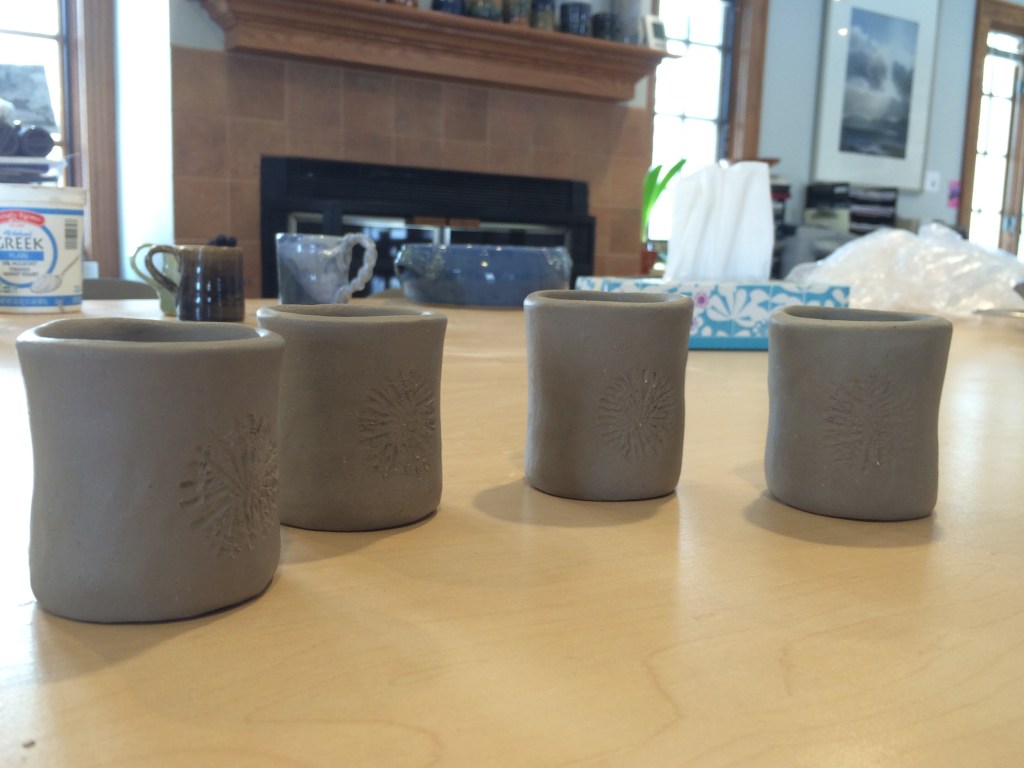
With color we can go from lifeless lumps of clay:

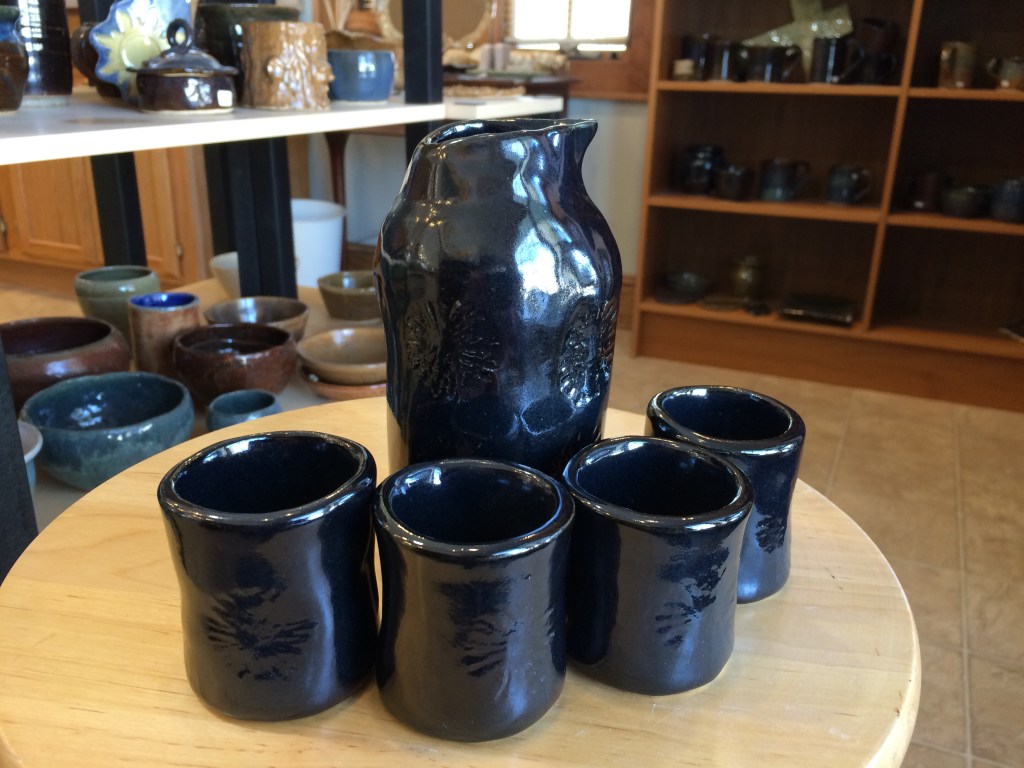
To beautiful and functional works of art:

(It’s a sake set.)

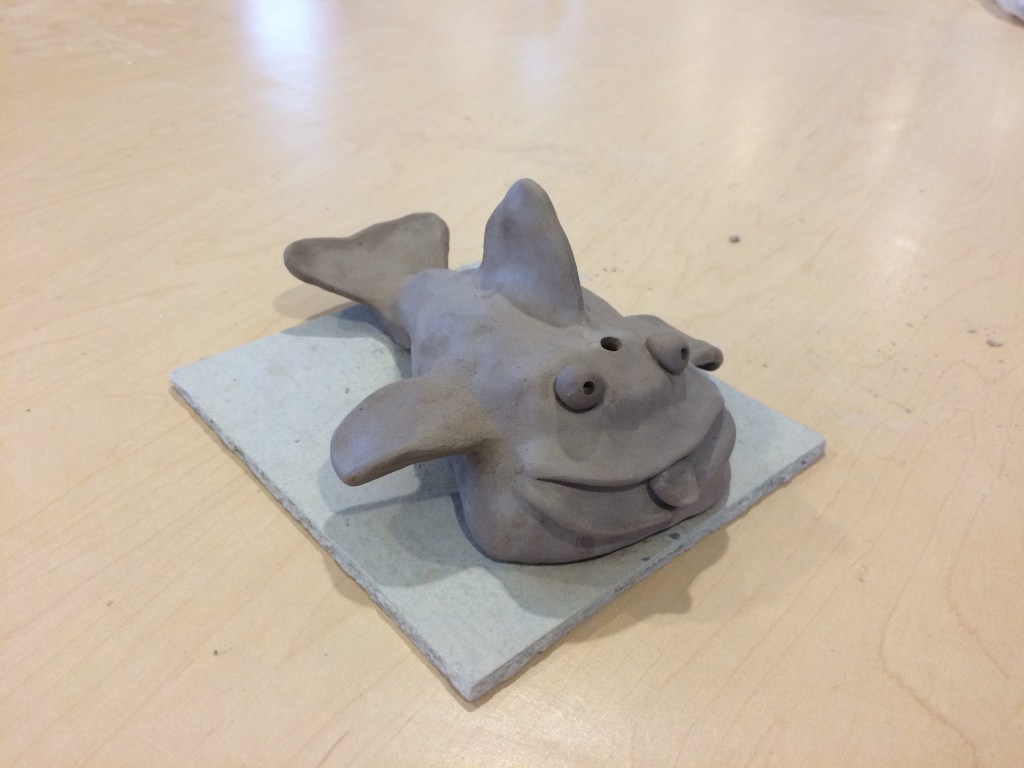
With color we can go from another strange lump of clay:

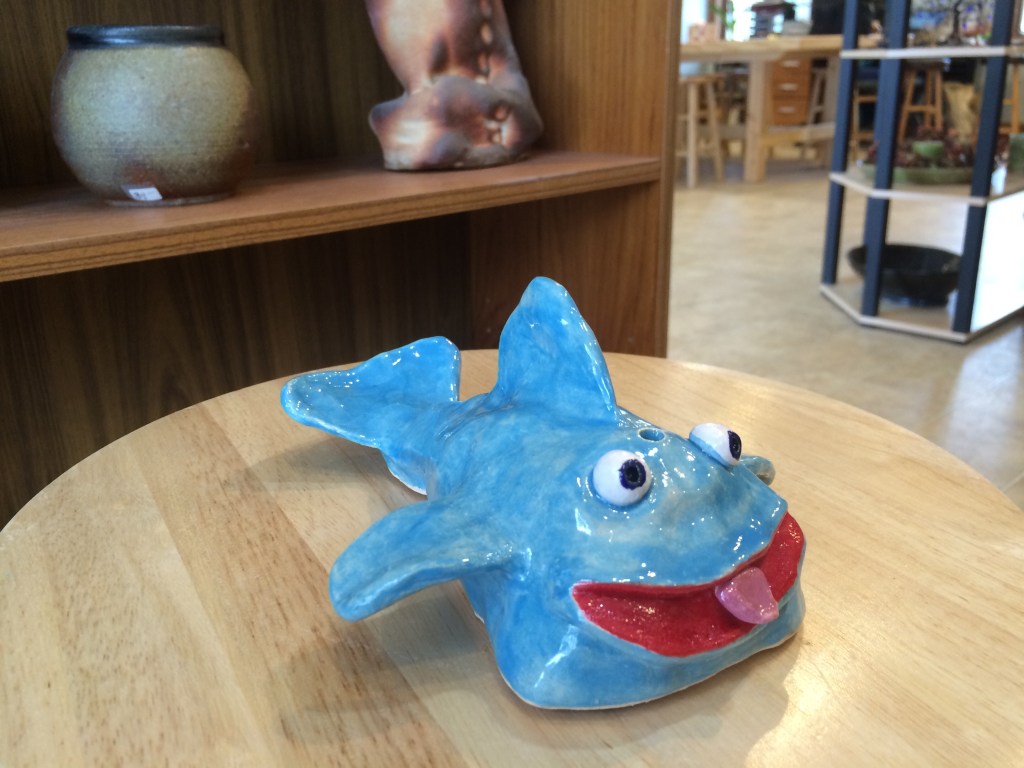
To something that comes to life:

(It’s a blue whale.)

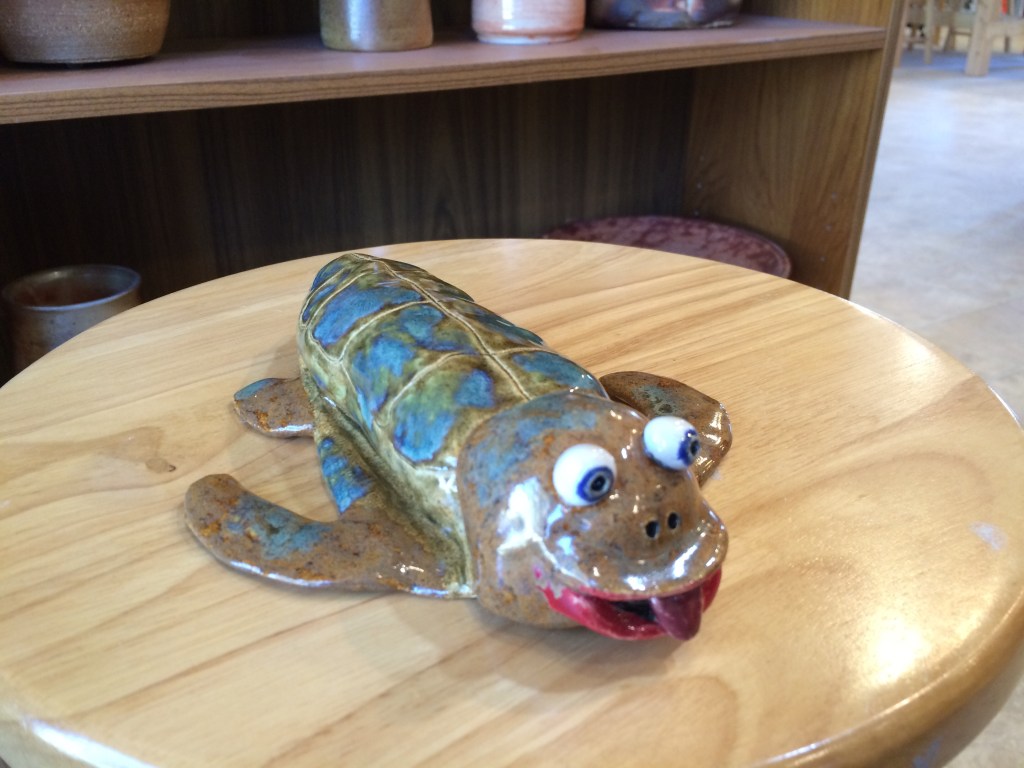
And even:

(It’s a sea turtle.)

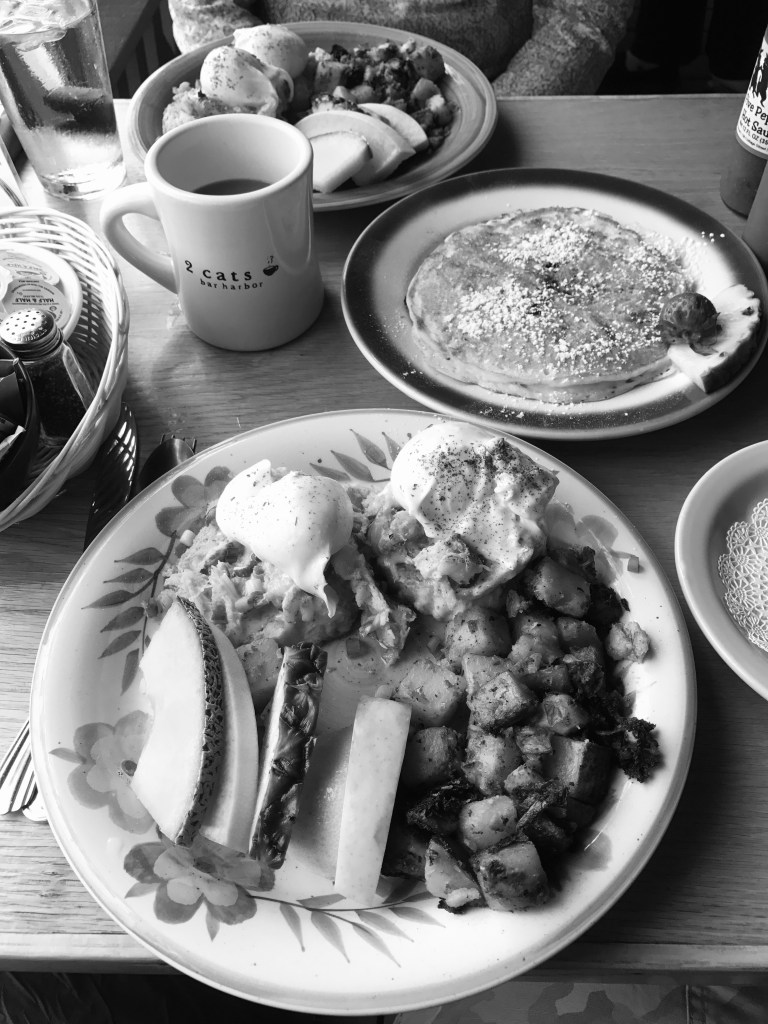
Breakfast. Maybe this looks artistic but:

And look at what happens when we add color:

(Yes it was delicious.)

So the crux of this blog/article/rambling is Porcelain Shade Matching. And why is porcelain shade matching important? It certainly helps us communicate with our dental labs more effectively as our labs are charged with crafting beautiful restorations for our patients. But ultimately it’s about esthetics and PLEASING our patients. Pleased patients means happy patients (even though they may still hate dentists). Patients won’t know why a restoration does or doesn’t look right but patients won’t be happy when their restorations don’t look right and we have an obligation to give patients restorations that work well…and look right.

Now, I feel like there is no way that we’ll be able to really appreciate shade matching without taking a trip to ART CLASS (with a little physics…and maybe even a little dentistry thrown in for good measure). More on that in Part 2.

My Favorite Places to Nap at Walt Disney World

Disney trips are always tremendously fun (at least my Disney trips are tremendously fun). And accompanying that tremendous amount of fun is usually a distinct lack of sleep (who can sleep with all that fun!). Early flights to Orlando, early morning races to the parks, thousands of daily steps around the parks, late night fireworks and/or shows, and then outside-the-parks attractions like Disney Springs and the Boardwalk and it is no surprise that a little fatigue starts to settle in. PLUS, my wife REFUSES to allow me to take breaks (yeah, she’s continually paying me back for my July Disney Death March Honeymoon where I had EVERY moment of EVERY day meticulously planned…sorry Dear). So when that after lunch mid-afternoon sleepy (and crabby) starts to creep in these are a few of my favorite places to catch a little nap on the go (I will update/expand this list as I nap in more places).

Magic Kingdom: Carousel of Progress; Hall of Presidents; Country Bear Jamboree; People Mover.

Epcot: Spaceship Earth; Awesome Planet Movie (at Living with the Land Pavilion); Impressions of France Movie (at the France Pavilion); the American Adventure Show (at the American Pavilion); The Three Caballeros (in the Mexico Pavilion).

Animal Kingdom: Finding Nemo-The Musical; Rafiki’s Planet Watch Train.

Hollywood Studios: Journey of the Little Mermaid; Beauty and the Beast Show.

Hope this helps you catch a little nap while on the go at Walt Disney World.

Why I Am Not A Mentor

I have been asked this question by many people. The short answer: I am a mentor. Perhaps the question is more appropriately: why am I not a part of the WDA Mentor Program? Well, that may be a bit more complex.

Truly, I am not a part of the WDA Mentor Program. Once upon a time I did participate in that program. And I believe that the WDA Mentor Program is an excellent opportunity for students and dentists. However, the WDA Mentor Program is not a good fit for me. That doesn’t mean I’m not a mentor though.

Huh? Yes, I do consider myself to be a mentor. So maybe this begs the question: what the heck is a mentor? And now that’s a really tough question to answer as there are MANY ideas and definitions regarding what a mentor can and should be. Mix in the whole idea of mentoring programs, both formal and informal, versus individual mentoring, both formal and informal and I could go on and on. And how do we separate mentoring from teaching and coaching? To me there is much overlap and confusion and certainly not anything that I can clearly define…but let’s try.

So I am a teacher. As such I feel obliged to provide to my students educational materials usually in the form of information. Sometimes that providing of education/information requires a higher level of input and attention from me and that’s when I believe I step into the role of coach. In fact, I believe a great deal of my daily teaching falls into the category of coaching. And what do I mean by that? I provide step-by-step instructions on how to perform an activity and then I stand by to monitor and critique progress toward an end product or goal. Much like a baseball batting coach analyzing a player’s swing then making suggestions on how to improve/maximize a swing technique, I will give feed back on how a student is: holding a hand piece; developing a margin; carving anatomy; collecting data; just about everything that leads to a dental end goal.

Mentor. Now that’s a bit more complex. I believe I am a mentor and, as such, I am necessarily going beyond a teaching and/or coaching role (although teaching and coaching are integral parts of being a mentor) with someone. To me, being a mentor is about a deeper relationship that develops organically all on its own (two people who’s philosophies and mannerisms align and are compatible). Oftentimes a teaching relationship provides a convenient means/venue for a mentoring relationship to develop but, to me, mentoring doesn’t necessarily depend upon a teaching environment to flourish. And I don’t believe someone just declares themself to be a mentor: I believe we become a mentor only when a person chooses us to be their mentor. In other words, I am a mentor because someone chose me to be their mentor (versus being a teacher where no one has a say in my being their teacher). And the person who chooses me to be their mentor then becomes recognized as a protégée or protégé.

So what happens in a mentor/protégée/protégé relationship? Certainly teaching and coaching. But there is necessarily a great deal more dialogue. Comfortable dialogue. Richer dialogue. And that dialogue usually spills over into thoughts and ideas beyond the educational or workplace task at hand. Oftentimes dialogue includes bigger picture ideas such as life experiences. And continual dialogue necessarily leads to the development of richer levels of trust. Mentors, I believe, must necessarily bare their souls to their protégées/protégés and this requires trust. At the same time protégées/protégés trust that they can initiate dialogue with their mentor about their deepest fears, darkest moments, and greatest elations (mentors are sometimes the first people that protégées/protégés will go to with pressing educational and/or workplace issues). Most often, solid mentor/protégée/protégé relationships develop into lifelong meaningful friendships.

So I am proud to say that I am a mentor. I have been chosen to be someone’s mentor. I take great pride in that fact. I am humbled when someone chooses me to be their mentor. And I am acutely aware of the responsibility that comes along with my being someone’s mentor. In other words, my being a mentor is not something I take lightly yet it’s something I cherish.

Dental Office Dispute Resolution

With your permission I wish to take you on a journey to a realm where many dentists fear to tread: dental office disputes. And I wish for us to establish a mindset in which we believe that disputes can be beneficial and can be a powerful motivator for change when managed well.

Let’s face it, though. Disputes are not something we typically look forward to. Thousands of years ago Aristotle pondered disputes and offered that anyone can become angry—that is easy; but to be angry with the right person, and to the right degree, and at the right time, and for the right purpose, and in the right way—that is not within everybody’s power and it is not easy. Several years after Aristotle the Christian tradition painted a somewhat more positive picture of disputes when suggesting that blessed are the peacemakers. However we choose to look at disputes I believe that we need not fear disputes. We have dispute resolution tools at our disposal that empower us to collaboratively transform disputes from something to fear into something to embrace.

(For simplicity the terms “conflict” and “dispute” will be used interchangeably throughout this posting. However, please be aware that the literature suggests differences which will not be discussed.)

Most dentists work in private practice, the military, and/or accept university appointments and, as such, are likely responsible for hiring, training, critiquing/reviewing, and disciplining staff. And many dentists report that their number one office concern is staff and staff issues: staff disputes and turnover can be detrimental to the profitability and emotional chemistry of a dental office; hiring staff and training staff is expensive and time consuming; and staff conflicts detract from the chemistry of an office which may ultimately affect the bottom line. Plus, it’s mentally challenging for the office team, dentist included, to work in a toxic environment. But staff are not the only disputants in a dental office. Other potential disputants can be patients (and their families), associates, business partners, spouses of business partners, labs, dental suppliers, repair techs, landlords, lawyers, elected officials, insurance companies, the government, etc.

Anytime, anywhere, and in any job there are going to be disputes. Christianity says that where two or three gather in My name, there I am with them. At the same time when two or more gather disputes are likely also with them. A dental office is no exception. And dentists, like many Americans, tend to avoid conflict as much as possible. In fact, studies show that 50% of Americans are conflict avoidant meaning that one half of all Americans in a conflict or dispute will choose to ignore it, choose to not deal with it directly, never address the issues that led to the dispute, and hope it will blow over all on its own. In a dental office (or any office/relationship) conflict avoidance can have serious repercussions. Untreated conflicts and disputes will fester, bubble over, and eventually become worse (think of an untreated abscess…).

Dentists are the leaders of their respective offices or departments. As such dentists are expected to lead their offices/departments through disputes. In other words, the dentist is responsible for resolving disputes in her/his office or department and this creates a potentially bad scenario: as discussed previously many dentists want to avoid and/or ignore disputes. And how disputes are ultimately handled is of the utmost importance: disputants need to be treated well and in the right way (as difficult as this may be at times).

As stated previously, we have dispute resolution tools at our disposal that can transform disputes from something to fear into something to embrace. What exactly do we mean when saying “dispute resolution”? Dispute resolution refers to the process of moving disputants toward the settlement of a dispute. And there exist many different processes that we use for the resolution of disputes. Some may be familiar, some not so. And all employ varying degrees of win-win (collaborative, joint problem-solving, interest-based bargaining) or win-lose (adversarial) interactions/techniques. The most recognizable dispute resolution processes in the U.S. are litigation, arbitration, mediation, and negotiation. (In the recent past all non-litigation dispute resolution processes were referred to as “alternative” dispute resolution. With “alternative” dispute resolution gaining more traction and becoming mainstream the literature is trending toward dropping the “alternative” designation. Now most non-litigation processes are being designated as simply “dispute resolution”. This is effectively excluding litigation as a labeled dispute resolution process and establishing “dispute resolution” as something separate/distinct from litigation. This posting supports the concept of a stand alone dispute resolution designation separate from litigation and all further mention of dispute resolution in this posting will refer to non-litigation processes.)

Dispute resolution executed well does not mean there will be an absence of disputes: there will always be disputes. Typically, what is dispute resolution expected to accomplish? Aside from the obvious settling of disputes, dispute resolution may establish and/or strengthen the relationship of trust and respect between people or terminate relationships in a manner that minimizes emotional costs and psychological harm. Further, disputes can have a positive side because good can arise from disputes. Usually disputes exist because something is not right and most likely needs fixing. Good can arise if the not-so-good issue that’s causing a dispute is discovered and effectively remedied.

Disputants (people in a dispute) typically argue because they want something and, dentistry notwithstanding, many feel that disputants share in a general lack of communication or perhaps even fail to communicate. This may not necessarily be true as we find that many disputants know and communicate all too well with their opponent/s. What is usually lacking between disputants is effective communication that discovers and explores the issues driving their particular dispute (disputes are all too often motivated by unfulfilled needs and/or a clash of values). How do we effectively communicate with our opponent/s? How do we jointly problem-solve with someone who may be irate? How do we collaborate with our opponent/s and keep our sights on win-win? Enter “[t]he method of principled negotiation developed at the Harvard Negotiation Project” (Fisher and Ury 1981, p. xviii) which, by many accounts, has become the well-spring of today’s dispute resolution movement. The method is comprised of four distinct parts and they are as follows:

“Separate the People from the Problem” (Fisher & Ury 1981, p. 10)

Great care must be taken to ensure that ingrained human frailties do not turn negotiations away from the original problem that precipitated the dispute. Further, we need to ensure that we create and maintain an environment that supports effective negotiations and joint problem-solving. All too often disputant’s inner dialogues, outward verbalizations (including word choices), body language, and emotions turn negotiations away from objective problem solving and create entirely new problems (and subsequent disputes). Often disputants become so engrossed in new problems created by out-of-control emotions and language that the entire precipitating problem is supplanted and may become nearly impossible to re-discover (all too often disputants give up and hire attorneys to continue the battle until someone wins and someone loses and all at great financial and emotional cost). Essentially, barriers to effective negotiations become ensconced.

William Ury (1991) suggests that negotiations can not and should not proceed until negotiation barriers are breached (as stated previously, we need to create and maintain an environment that supports negotiation and joint problem-solving). How do we get around negotiation barriers? Ury’s (1991) answer is the five strategies of “breakthrough negotiation” (p. 9). Strategy number one is first and foremost we must manage our personal emotions and reactions. Ury (1991) calls this “go to the balcony” (p. 11) with the balcony representing a calm mental promontory from which to step back from a situation, calm down, ascertain the situation, and regain perspective and composure before re-entering the situation or negotiation. Strategy number two is management of the other disputant’s emotions and reactions. Ury (1991) calls this “step to their side” (p. 53) which requires doing the opposite of what the other party expects. Ury (1991) suggests that opposites, such as listening and acknowledging (rather than attacking), can catch the other party off-guard. This creates a psychological condition called “cognitive dissonance” (p. 67) which is “an inconsistency between perception and reality…inducing [the other disputants] to change their perceptions of you in order to reduce the cognitive dissonance” (p. 67). Strategy number three is reframing the other party’s tactics as means to tackle the problem. For example, the opposite of rejecting the other party’s tactics is to acknowledge their proposals and then reframe the proposals as potential options (thereby turning the proposals toward identifying interests). Ury (1991) calls strategy number four “build them a golden bridge” (p. 4) in which we help give our opponent/s a voice in developing their own answers and solutions (this effectively supports appreciation and autonomy). Strategy number five is to use our power not to attack or escalate the conflict but to educate the other party. Ury (1991) suggests “(u)se your power to educate the other side that the only way for them to win is for both of you to win together…Don’t try to impose your terms on them. Seek instead to shape their choice so that they make a decision that is in their interest and yours” (p. 133).

“Focus on Interests, Not Positions” (Fisher & Ury 1981, p.10)

According to the famed psychologist Abraham Maslow, every human has innate needs and values. Maslow (1943) labeled them “physiological” (p. 372), “safety” (p. 376), “love” (p. 380), “esteem” (p. 381), and “self- actualization” (p. 382). Fisher and Shapiro expanded upon Maslow’s (1943) “hierarchy” (p. 386) and introduced the “five core concerns” (Fisher and Shapiro 2005, p. 15). “Core concerns are human [needs] that are important to almost everyone in virtually every negotiation. They are often unspoken but are no less real than our tangible interests. Even experienced negotiators are often unaware of the many ways in which these concerns motivate their decisions…These core concerns are appreciation, affiliation, autonomy, status, and role” (Fisher and Shapiro 2005, p. 14).

In dispute resolution we collectively refer to each person’s unique needs, values, and core concerns as their interests and understanding interests is key to the effective resolution of disputes. Interests speak to each one of us subconsciously and are the powerful yet silent motivators that drive people toward particular wants. We collectively refer to people’s unique wants as their positions. For example: “I want a million dollars” = a position; or “I want a Rolls Royce” = a position. So what are the interests (why’s/needs) that are driving the positions in our examples? “I want a million dollars” (why?…here comes the interest) “because I need to start my charitable foundation”. “I want a Rolls Royce” (why?…once again, here comes the interest) “because I need to start my luxury chauffeur business”. In sum, needs and values equal interests…interests generate positions…positions represent wants.

Positions are usually expressed as singular wants and each position is silently motivated by multiple interests and herein lurks a problem: fixation on positions is the fuel that sustains disputes. It is unfortunately all too easy for disputants to lose sight of the multiple interests that generated their particular position and all too often people believe that the only way to achieve satisfaction is through the fulfillment of their position. And people will go to great lengths to get what they want and often adopt a winner take all attitude which can drive people to extreme and unspeakable lengths such as violence and war. However, by uncovering and discovering people’s interests, and by understanding and recognizing interests, we can generate creative options that may satisfy a person’s position in a multitude of different and alternative ways. To re-cap, interests, which are usually multiple in nature, are the silent motivators that generate singular positions; recognition and understanding of the multiple interests that generated a particular position provides creative options that may satisfy the position and may ultimately lead to resolution of the dispute. To illustrate, think of an iceberg. The tip of the iceberg sticking out of the water is a person’s position (you don’t see a whole lot, only the little bit that a person allows you to see). But the biggest part of the iceberg rests underwater, invisible, and that invisible part is made up of all the interests that support that tiny and precarious position that we see above the water. Until we see and understand a person’s interests (and even help that person to acknowledge their interests) we may never really know how to satisfy a person’s position.

Here’s another way to look at the struggle between positions and interests. Argue for your position and you will most likely be fighting for one thing, and one thing only, which you may or may not get, and it will become a battle that you must win at all cost at the expense of your opponent (win-lose). Argue for your interests and you will be able to negotiate over several different and creative options with the likelihood that you and your adversary will collaborate and walk away from the dispute each with something to show and both of you will have won (win-win).

So, with dental office disputes a big mistake we dentists make is to assume we know what’s wrong with office disputants and well intentioned fixes can end up blowing up in our faces only because we have not uncovered, identified, and understood disputant’s interests. Shuffling staff hours, repositioning staff in the office, discounting procedures for angry patients, etc., usually don’t work unless we’ve first diagnosed the issues by uncovering, identifying, and understanding the underlying interests. An analogy is two children who want an orange and are subsequently fighting for the orange. Mom comes along, splits the orange in two, gives each child a half and now the children become angry and agitated at mom because that’s not what they needed. Mom says “huh?”. One child says that she needs the rind so she can bake and now she has only half of what she really needs and a bunch of pulp she doesn’t want. The other child says that he needs the pulp for juice and now has only half of what he needs and a bunch of peel he doesn’t want. If mom had taken the time to uncover the children’s interests then she could have generated options to satisfy the reasons why the children needed the orange in the first place. Position=I want the orange. Interest=I need the rind. Interest=I need the pulp.

“Invent Options For Mutual Gain” (Fisher & Ury 1981, p. 56)

As just alluded to, discovery of interests allows for brainstorming of multiple creative options for settlement. And a very important part of this step is to not squelch the creative process. Many options, including some that may seem outlandish, should be generated and considered. The amazing part of this stage in the negotiation is when disputants discover that they really needed the very same things all along. After just consideration of each option disputants are empowered to choose the best means for everyone to walk away from the bargaining table with a degree of satisfaction.

“Insist on Using Objective Criteria” (Fisher & Ury 1981, p. 80)

“The more you bring standards of fairness, efficiency, or scientific merit to bear on your particular problem, the more likely you are to produce a final package that is wise and fair. The more you and the other side refer to precedent and community practice, the greater your chance of benefitting from past experience…A constant battle for dominance threatens a relationship; principled negotiation protects it. It is far easier to deal with people when both of you are discussing objective standards for settling a problem instead of trying to force each other to back down” (Fisher & Ury 1981, p. 83).

In Conclusion

Dispute resolution is not a panacea. Understanding someone’s interests does not always mean that changes can be made in a dental office setting to satisfy disputant’s interests. We can generate creative options through understanding a person’s interests but sometimes even those creative options may not satisfy a person’s interests and this is the time to decide if a person is truly compatible with the interests of the office. So, uncovering people’s interests in dental office disputes can help us to decide if, for instance, terminating someone’s employment or dismissing a patient may be the best thing for the office. As previously stated, dispute resolution may establish and/or strengthen the relationship of trust and respect between people or terminate relationships in a manner that minimizes emotional costs and psychological harm. Further, disputes can have a positive side because good can arise from disputes. Broken parts of the office can be mended, broken relationships in the office can be repaired and strengthened, and people who should no longer be together in the office can go their separate ways and find new ways to be happy and prosper.

Bibliography:

Fairhurst, G. T., & Sarr, R. A. (1996). The Art of Framing(:)Managing the Language of Leadership. San Francisco: Jossey-Bass.

Fisher, R., & Shapiro, D. (2005). Beyond Reason(:)Using Emotions as You Negotiate. New York: Penguin Books.

Fisher, R., & Ury, W. (1981). Getting to Yes(:)Negotiating Without Giving In. New York: Penguin Books.

Follett, M. P. (1995). “Constructive Conflict” in Pauline Graham, ed., Mary Parker Follett–Prophet of Management: A Celebration of Writings from the 1920’s. Boston: Harvard Business School Press. As retrieved from Menkel-Meadow, C. J., Love, L. P., Schneider, A. K., Sternlight, J. R. (2005). Dispute Resolution(:)Beyond The Adversarial Model. New York: Aspen Publishers.

Gerzon, M. (2006). Leading Through Conflict. Boston: Harvard Business School Press.

Goman, C. (2011). The Silent Language of Leaders. San Francisco: Jossey- Bass.

Harper, G. (2004). The Joy of Conflict Resolution. Gabriola Island, British Columbia, Canada: New Society Publishers.

Maslow, A. H. (1943). A Theory of Human Motivation. Psychological Review. 50(4). pp. 370-396. As retrieved from http://psycnet.apa.org/journals/rev/ 50/4/370.pdf

Moore, C. W. (2003). The Mediation Process(:)Practical Strategies For Resolving Conflict. San Francisco: Jossey-Bass.

Stone, D., Patton, B., Heen, S. (1999). Difficult Conversations(:)How to Discuss What Matters Most. New York: Penguin Books.

Tannen, D. (1998). The Argument Culture(:)Moving From Debate to Dialogue. New York: Random House. As retrieved from Menkel- Meadow, C. J., Love,L. P., Schneider, A. K., Sternlight, J. R. (2005). Dispute Resolution(:)Beyond the Adversarial Model. New York: Aspen Publishers.

Ury, W. (1991). Getting Past No(:)Negotiating In Difficult Situations. New York: Bantam Dell.

Webster’s New World Dictionary (1983). New York: Simon & Schuster

Reflections on a Winter Gala

Last night I attended the Marquette University School of Dentistry’s Winter Gala. Always a wonderful night and something that my wife and I look forward to every year. And every year Gala is a time for me to see a little more of the human that dwells within each and every one of my students. All too often in life, and certainly right now in dental school, we seem to be railroaded into homogeneity and a lack of humanity: everyone required to wear their class scrub color with no deviations; prescribed uniforms that must be worn in certain areas or there will be repercussions (forget wearing a sweatshirt if you get cold); etc. To me it seems that we put forth way too much work and effort to dehumanize our burgeoning young professionals who will eventually be contributing to and working within a field/profession which is all about human interaction, empathy, and expression.

Winter Gala. One night to see beautiful dresses. One night to see dashing suits and ties. One night for burgeoning professional youth to be free from their shackles for a brief moment so to embrace and experience their fleeting and rapidly changing youth. One night that may be the very last time for D4 students to dance and sing and celebrate their youth as life and adulthood are calling and there is no choice but to be ready to be launched into life and commence practicing within the profession that we faculty have tried so hard (or not) to instill in our young protégés and protégées.

Unbridled youth. Enjoy these days. They are fleeting. Hold on to youth and life for as long as possible. Don’t hasten the transition. Life always moves us on to the next thing and most of the time that next thing in life is a good thing. But when we move on, as life always forces us to do, we always leave a little bit of ourselves in the past.

Gala is a chance for me to relive my days past. Gala is a time for me to live vicariously through my youthful student’s dancing and celebrating. Gala is a reflection back to my days of innocence. Days when I was just Patrick. Yes, I long for those days when people saw me as just Patrick (and not doctor). Yes, I have done the work, walked the walk, and talked the talk that have afforded me a title. But if I always was and am and will continue to be only that which I am then why the title? If doctor is what Patrick was and is then why can’t I just be Patrick? Maybe Gala brings me to this: the bright eyed youth doing that which I was always meant to do and will continue to be.

I miss my youth. I lament the many things that have derailed my bright eyed youth and innocence. Life happens. Sometimes life isn’t fair and doesn’t make much sense. And I am grateful that I get to see my students be the beautiful and youthful people they are especially at Gala. And I am grateful that my beautiful and youthful students daily remind me of where I’ve been and where I can go.

Enjoy these innocent days my friends. There will be good days. There will be not so good days. And if one works hard the not so good days shape us into greater and better versions of ourselves. I wish I could shelter my students from the not so good days but we all must face those days and learn from them so that we may grow into the better people we’re meant to be.

Thank you for last night. I cherish my time with you all.

Dental Education and Developing Mastery Through Practice and Feedback

One of my favorite books on education is Susan Ambrose’s How Learning Works: Seven Research-Based Principles for Smart Teaching. And until reading that book I had never heard the term “unconscious competence” in relation to mastery. And when I think about unconscious competence, it makes perfect sense (at least to me). Dental hand skill professors like myself don’t have to think about our hand skills anymore. Our hands just seem to know how to do whatever our brain says we need to do to prepare and restore (also know as drill and fill) teeth and we do this without much conscious effort (in other words, unconscious competence). However, when we (at least I) look back to when we were twenty two years old and just starting to prepare and restore teeth in our first year of dental school we are reminded (at least I am reminded) of how difficult and awkward and frustrating it was. There were days in dental school when we (maybe it was just me) wanted to scream and pull our hair out yet nowadays we hand skill professors are SO quick to forget those days (probably for survival purposes). But our students are smack in the middle of that struggle. And then we hand skill professors get so forking frustrated and scream and say shit like “they just don’t get it and maybe they’ll never get it…they’re hopeless”. Well now I know why the students don’t get it and why we professors get frustrated at students: our unconscious competence AND our expert blind spot (thank Susan Ambrose and her book for those two terms).

So how do I need to manage my unconscious competence AND my expert blind spot (keeping in mind that I am NOT a course director and have no control over lecture content given to students)? I have to constantly push through my expert blind spot (Ambrose, 2010, p. 112). In other words, I have to be ever vigilant to where the students are in their learning (if I have no clue as to where students are in their learning and development then I am blind to what they know and I am completely compromised in my realizing what I need to give students in order for them to excel). For instance, dental hand skill text books have been around for many years and have been perfected incrementally time and again (I still reference back to my hand skill text books). So I always need to be aware of student’s required text readings and what the text book’s author(s) have suggested. My course directors work hard to develop and present lectures in concert with the text book readings. So I always try to attend lectures so that I know exactly what the course directors are teaching and so that I can speak with a unified message when I get my opportunity to work with students. Also, my course directors work hard to develop learning objectives and it is my job to stick to those learning objectives. Further, my course directors work hard to develop rubrics for evaluating dental hand skills and it is incumbent upon me to rely on rubrics for a unified voice and a clear message to the students. And I always have to remember to put myself in my student’s shoes so that I can remain sympathetic to the things my students don’t know and the struggles my students face. Only after students have become comfortable with the the prescribed learning objectives can I then offer the new challenges of advanced techniques that may be of benefit but only after the basics have been experienced.

And how do I use learning objectives to guide students and help them gauge mastery? In my current role as a hand skill professor working under a course director and assigned to ten students at a time in the dental hand skills simulation laboratory, my options are limited. However, that doesn’t mean that I lack for good options. The best strategy at my disposal is to daily focus students’ attention on key aspects of the daily assignment (Ambrose, 2010,p. 114). I have to keep my ten students on task and I have to keep them focused on key components of that task. So I try to give them bullet points before they start their simulated patient treatment. As I know what they have learned in each of their dental hand skill classes my bullet points (or explicit instructions) help students to focus on what’s needed to get the job done and helps students to remember where they’ve been in order to bring old learning to bear on the current task. For instance, recently in one of the courses I help teach we were working on a particular task that required the students to use skills from a class they had over a year ago. By explicitly reminding students of: specific bullets from the current class; then asking students to remember bullets from a previous class; then me actually demonstrating what I was requiring of their work; then me explaining WHY we were doing things a certain way, I was MOST pleased by the results of their work (and I let them know that on the spot).

And how do I give feedback? As a hand skill professor working under a course director in the simulation lab I am limited in the ways I can give feedback. So my feedback has to be quick, direct, succinct, on-the-spot, and face-to-face. This type of face-to-face can be fraught with downsides so I have to manage myself well so as to only work toward a good end. For me I rely on balancing strengths with weaknesses when giving feedback (Ambrose, 2010, p. 149). I personally like praise so I strive to begin all feedback with praising those things that went well and/or improved from a previous attempt. I believe this keeps the students motivated and allows for an open environment where we can truly share ideas and learn from the experience. Then I get into talking about things that didn’t go as planned. It’s never easy to receive criticism (I usually hate it) so I am always very careful to not be attacking and/or provoking. In other words, I strive to have criticism be a part of the best learning environment as there are so many things we can learn from things that don’t go so well.

And after giving feedback I always ensure that the student understood what I was saying. So I always have a conversation with the student about my comments. I may give a demonstration. I may even have the student demonstrate the skill. This way I know the student has the idea of the goal in mind. Mastery shouldn’t be expected but seeing improvement in a particular procedure from a particular student the next time I work with that student (later that day or even later that semester) is proof that the criticism was warranted and pertinent. I will go out of my way to talk with students to see how a particular piece of advice has served them. And I always love it when students take criticism, make it their own, learn from it, and excel as a result. Students excelling at dentistry and developing mastery…isn’t that what we are (or should be) all about?

Ambrose, Susan A. (Ed(s).). (2010). How learning works: seven research-based principles for smart teaching. San Francisco, CA: Jossey-Bass

(My) Steps Toward a Bridge Prep

Umm, yeah, so where in the heck do we start prepping a bridge?  I’m sure there are a plethora of opinions (and probably even some evidence based research crap that someone had to do to get a Master’s or Doctoral degree).  Me?  I always seem to gravitate toward the lazy ass way of doing things (someone once suggested I work smarter and not harder…yeah right…).  So let’s get right to it (BTW, this write-up will pertain to a posterior bridge prep).

1. I prep the occlusals of all abutments.

2. I prep the functional cusp bevels of all abutments (and I am hoping that the angulations of my functional cusp bevels end up being somewhat the same on each abutment but is always dependent on individual patient conditions).

3. I will prep the buccal axial walls of all abutments.  By prepping all buccals at the same time I can make all of my buccal axial walls have the same amount of reduction/taper.  BTW, the buccals are, for me, easy (relatively speaking) to access and kind of become the cornerstone for my entire path of draw/insertion.

4. I will prep the lingual axial walls of all abutments and I will use the angulation of my buccal axial walls to give me the proper angulation of my lingual axial walls.  I always like to picture equal but opposite angles…3 degrees of taper on the buccal means a negative 3 degrees of taper on the lingual for a total taper of 6 degrees (my taper usually ends up being 10 to 12 degrees of total taper…5 to 6 degrees on the buccal and negative 5 to 6 degrees on the lingual…and that is well within “acceptable” to pass a practical exam AND Boards…Lord I hope to NEVER take another Board exam…XANAX PLEASE!!!).  And by prepping all of my lingual axials at the same time I can ensure that all of those lingual axial walls have matching reduction/taper (and play well with my buccal axial walls…I should see a good path of draw/insertion between all buccal axials and lingual axials at this point).  BTW, one of my previous blog postings (Cusp Tips on Crown Preps) has some suggestions for prepping axial walls in a way to get optimal reduction and a great path of draw with just depth cut measurements (lazy ass).

5. I will prep the distal axial wall of the mesial abutment and the mesial axial wall of the distal abutment (assuming there are only two abutments).  Why prep those surfaces now?  Cuz they’re easy to get to cuz a tooth is missing in between them therefore I don’t have to fight to do ideal preps on those axial walls (lazy ass).  And now by accessing/prepping all of the easy-to-get-to (relatively speaking) axial walls I can actually use all of those walls to nail down a path of draw before I tackle the hard-to-get-to in-between-the-teeth axial walls (it doesn’t always work out that I can get a path of draw early on but when I do it takes so much pressure off of establishing a path of draw on the mesial axial wall of the mesial abutment and the distal axial wall of the distal abutment).

6. I will prep the mesial axial wall of the mesial abutment and the distal axial wall of the distal abutment.  I will initiate my preps with an ideal MO box prep on the mesial abutment and an ideal DO box prep on the distal abutment using a 245 bur (I can drop Class II box preps in my sleep…please see a previous blog posting about how I do interproximal preps on crowns).  After creating ideal Class II box preps then I can quickly/easily (relatively speaking) blow through those cleared out proximals with my crown prep bur.  Finally, I will make fine adjustments to those axial walls to incorporate them into the path of draw/insertion I’ve already established with the easy-to-get-to (relatively speaking) axial walls.

7. I will finish things up with establishing my nonfunctional cusp bevel and tapering/connecting my functional and nonfunctional cusp bevels into the central groove mid-mesial and mid-distal at the occlusal/axial line angle. 

And with that, may we all find that path of draw/insertion that we all deserve and will lead to treatment success. Namaste’

Cusp Tips on Crown Preps

So what in the heck do we do with cusp tips on crown preps? Are we “just” prepping them and hoping for the best? Or are we trying to accomplish something? And if we are trying to accomplish something what the heck are we trying to accomplish? In a nutshell cusp tips need to end up exactly where they used to be (and, of course, they’ll be a bit shorter: 2mm for porcelain fused to metal/all ceramic and 1.5mm for full cast) so that we can achieve perfect clearance for long term success of our crowns (including esthetics). And how do we put the cusp tips back where they used to be? I’m glad you asked (well, maybe you didn’t ask…and maybe you don’t care…which seems odd if you’re still reading this posting). We “move” the cusp tips into place through our prepping functional and nonfunctional cusp bevels. Huh? Yes! Those bevels are not just something we have to do just because we were told to do it back in our dental school crown and bridge class days. Functional and nonfunctional cusp bevels serve a…function (no pun intended…actually, yes, pun intended).

So how do we get those functional and nonfunctional cusp bevels to “function” properly. What sequence of steps do we follow? I like to start things off by prepping the occlusals of my crown preps first. Why? Is it just because I was told to do it that way back in dental school in my crown and bridge class? Yes and no. Yes, because I was taught to do it that way in my crown and bridge class (at the lovely University of…yeah, you all know where I went to dental school). And no, because there is more insulating tooth structure between bur and pulp on the occlusal versus the axial surfaces of the tooth…the more occlusal tooth structure I can eliminate upfront means less axial height/tooth structure I have to cut away which usually means a little less insult to the pulp (please don’t insult the pulp as pulps are very sensitive to insults which will likely lead to patient annoyance which may end up in your patient insulting you).

And how do we get the perfect amount of occlusal reduction? There are a number of ways we can bulls-eye our occlusal reduction. In the Simulation Lab we can and should use a putty matrix (preferred method as it gives an exact/objective measurement AND is how preps will be graded during the Capstone exam AND BOARDS). On a human we need to adjust the amount of occlusal reduction based upon clearance between our prep and the opposing tooth before we prep. It’s important to remember that on a HUMAN the amount of clearance between the occlusal part of the prep and the opposing tooth IS key. Remembering that we need 2mm clearance for PFM/ACC and 1.5mm clearance for FCC we remove only enough tooth structure to achieve that ideal clearance (for instance, if we have, say, 1 mm of clearance between opposing teeth before we prep anything then we only need to reduce 0.5mm to 1.0mm on our crown prep depending on the type of crown we’re doing). And there are various tools at our disposal to measure the clearance between our prep and the opposing tooth: wax (my method of choice); occlusal reduction gauges; ball burnisher; etc. In the Simulation Lab we are keeping things SIMPLER (if you can believe that) by disregarding the occlusal clearance between the unprepared teeth before we prep (we are actually assuming that our unprepared tooth is in exact occlusion with its opposing partner) and use STRICTLY the objective preparation measurements given to us by the putty matrix. And when we are done with our occlusal reduction we should have some semblance of occlusal anatomy remaining (same shapes just shorter) AND our inner cusp slopes of our prep SHOULD BE PARALLEL to the cusp slopes of the opposing tooth (that way there will be the exact amount of clearance throughout the entirety of the occlusal part of our prep). Further, our prep will NOT have any cusp tips at this point and our occlusal should look like Pac Man with its mouth open way too wide.

Now we have an important decision to make: do we prep our functional/nonfunctional cusp bevels first or do we prep our axial walls instead? If we decide to prep our functional/nonfunctional cusp bevels first it will give us less axial tooth structure to prep which might help the pulp a bit BUT it might be easier to overtaper the prep when it comes time to prep the axial walls. If we decide to prep our axial walls first we might be able to bulls-eye the taper on the nonfunctional cusp but not necessarily on the functional cusp (because it’s SO curvy) and we might insult the pulp a bit more. So how about a compromise? How about prepping the functional cusp bevel before axial reduction and then prepping the nonfunctional cusp bevel after axial reduction?

So let’s try prepping that functional cusp bevel before we do any axial reduction. And how do we prep that functional cusp bevel? Bur angle is KEY. And how do we get that angle? Line up your bur with the occlusal third of the functional cusps on neighboring teeth AND/OR the opposing cusp slope on the tooth opposing our prep (our functional cusp bevel will end up being parallel to the opposing cusp slope just like we did with the inner slopes of the occlusal part of our prep). Bur angle will be anywhere between 25 and 45 degrees and it HAS TO MATCH the angle of neighboring and opposing tooth structure (because exact clearance is key to crown success). And now with exact bur angulation we start digging first into the occlusal and then the middle third of the outer slope of that functional cusp. By doing so we create a whole new outer slope plane on that functional cusp that matches the angulation of the teeth next door AND ESPECIALLY the OPPOSING CUSP SLOPE. And as you’re creating that plane you will begin to see CUSP TIPS reappear. And as those cusp tips reappear we “move” them closer and closer to where they used to be. And when do we stop prepping that functional cusp bevel? At that exact moment when our cusp tips end up directly in line with neighboring cusps (or when the cusp tips are directly under their original position in the putty matrix). So now we should have three prepped planes: one inner cusp slope (buccal side of the occlusal); a second inner cusp slope (lingual side of the occlusal); and a functional cusp bevel (within the occlusal and middle third of the outer slope of the functional cusp). Those three planes should all be exactly parallel to their opposing cusp slopes (it will look like a capital N that is stretched/elongated with obtuse angles rather than ninety degree angles). There should now be a significant/prominent line angle where the functional cusp bevel prep meets the unprepared axial surface. Further, I haven’t taken the functional cusp bevel interproximally/gone past the MB, DB, ML, or DL line angles into the mesial and distal (I will connect/taper the functional cusp bevel into the central groove on the mesial and distal AFTER I have prepped the mesial and distal axial walls). And oh, lest I forget, the central groove will also be exactly where it was before prepping (just shorter).

Now what? Let’s prep our buccal and lingual axial walls. So now we need to be very cognizant of getting the right amount of reduction moving from gingival third toward the occlusal to give us JUST the right amount of taper to: have excellent retention AND NOT produce an undercut; avoid over prepping/over tapering. In doing so we really have to avoid having the axial reduction result in the loss of the functional cusp bevel that we worked so hard to make (in other words we have to make sure that our axial prep doesn’t go directly from gingiva to the cusp tips we worked so hard to produce/move into place by creating that functional cusp bevel…ya gotta keep a functional cusp bevel or ya gonna be over prepped/over tapered). So we always try to keep a bit of a line angle/break where the axial part of the prep meets the functional cusp bevel. And how do we do this? How do we get an outstanding overall axial reduction? We have to limit the amount of axial reduction occlusally to no more than 0.75mm greater depth than where we started out gingivally. In other words, a 1mm gingival chamfer will end up tapering to a depth of (ideally) around 1.5mm of reduction at the occlusal most part of our axial preparation. Or, a 0.5mm gingival chamfer will end up tapering to a depth of (ideally) around 1.0mm of reduction at the occlusal most part of our axial preparation. That’s not much (we can always make further adjustments as needed later on based upon individual/unique patient needs). And how does the proper amount of axial reduction look occlusally in relation to our functional cusp bevel and nonfunctional cusps (remembering that we haven’t placed a nonfunctional cusp bevel yet). Depth cuts from gingival to functional cusp bevel LINE ANGLE will result in a depth cut that is 0.5mm deeper than the gingival axial depth (so if we start at, say, 1mm depth axially at the gingiva then we should have a depth cut of around 1.5mm deep at the functional cusp bevel line angle). AND, depth cuts from gingival to the terminus of the nonfunctional cusp at the occlusal surface preparation (in other words, the LINE ANGLE where the occlusal prep meets the unprepared outer slope of the nonfunctional cusp) will also result in a depth cut that is 0.5mm deeper than the gingival axial depth (so if we start at, say, 1mm depth axially at the gingiva then we should have a depth cut of around 1.5mm deep at the occlusal/nonfunctional cusp line angle). And now we connect all of our depth cuts AND prep our mesial and distal axial surfaces (I describe my technique for prepping mesials and distals in a previous posting).

And now for the nonfunctional cusp bevel. Looking at the angle of the occlusal-most 2mm of the outer slopes of neighboring teeth’s nonfunctional cusps (which can be anywhere from 65 to 85 degrees) I can then use that angle and prep into the outer slope of the nonfunctional cusp/s on the tooth I’m prepping and “move” the cusp tips in line with the cusp tips on neighboring teeth (or prep until the cusp tips line up with where they used to be in the putty matrix). The process is very similar to what we did with the functional cusp bevel with the exception that there is no cusp slope opposing that outer slope of our nonfunctional cusps. Also, the nonfunctional cusp bevel on mandibular molars will be minimal due to those cusps having little to no contour. Further, I may have to “move” those nonfunctional cusp tips just a bit more than their original position if I find that there isn’t enough space on the occlusal most 1 to 1.5mm of the outer slope of that bevel to completely accommodate the space needed for proper crown thickness (1.5mm for FCC and 2.0mm for PFM/ACC) and this is usually readily/measurably apparent using a putty matrix (in the Sim). So now we should have a proper nonfunctional cusp bevel which should have proper clearance for metal or metal/ceramic or ceramic. And finally I will bring the functional and nonfunctional cusp bevels around the MB, DB, ML, and DL line angles and taper/connect them to the central groove on the mesial and distal.

Goals and Motivation in Education

Throughout my life I believe that, to a great extent, my educational and learning motivations have waxed and waned as a direct result of my goals. In my younger years, especially in high school, my goal was to get good grades (whatever the class) so that I could be accepted into a good college. And when I say “whatever the class” I mean I had to slog through a whole lot of classes that I really did not care for yet I had to do well in because my goal was to get the reward at the end: good grades followed by a good college. However, in high school I came to realize that I really liked my biology classes and as a result I felt more motivated to study and truly learn the material. Yet I really truly wanted to be in music classes above all else and I worked darn hard at music because I loved it.

Same story in college. So many classes I wouldn’t ordinarily think of taking but had to. Classes such as organic chemistry, physics, freshman english, etc. I had to take them either to graduate and/or qualify for grad school. Once again, I really wanted to take music classes because I loved music. For instance, although it was damn hard I really put my all into music theory as it pertained to one of my real loves which was (and still is) music. I so loved all of my music classes and music ensembles. However, I also really loved my January interim class that was spent in Jamaica studying marine biology. So I survived the stuff I disliked just to get good grades and provide evidence that I took the requisite classes. Yet I deeply enjoyed studying things I loved.

As an adult (OTHER THAN dental school) I have had much more control over the things I love and want to study. For instance, before entering into my Master’s Degree program (Dispute Resolution) I had a deep and vested interest in the subject matter. And because of that deep and vested interest I savored each class I took. Was it hard work? Yes. But I was so very motivated to learn.

So what does this all mean in relation to goals? Ambrose (2010) pages 71 through 72 helped me to see different types of goals I have employed (unknowingly) throughout my life. So back in those days when I was slogging through classes that I just didn’t want to take, yet needed to take and get good grades, I was adhering to the idea of performance goals especially performance-approach goals. As such I was focusing “on attaining competence by meeting normative standards” (Ambrose, 2010, pp. 71-72). And in those times when I really loved the subject matter and wanted to learn I was adhering to the idea of learning goals and as such I was working to “gain competence and truly learn what an activity or task” (Ambrose, 2010, p. 71) could teach me.

So much of dental school necessarily revolves around performance goals and performance-approach goals (because of so many disparate classes and some classes that just..suck). And so a big failure I once upon a time had in teaching dentistry was my derailing student’s tenuous motivation by trying to demand perfection: I demanded that students produce perfect work. And I would go so far as to have students re-do work until it was perfect. I was such an idiot but this was all I knew as this was how I was taught how to do dentistry back when I was a damn dirty diseased dental student at the University of Minnesota. And I really do think that this caused students to lose motivation. Worse, students began to fear me as a grader/instructor. They just couldn’t live up to the perfect standard. Students became frustrated and would just take whatever grade they received or just avoid me altogether. And I don’t think they learned well because rather than working with and through mistakes in order to make things better I would just have them start over (or kill their grade) and so they never had the opportunity to learn from (and fix) their mistakes. I wanted students to land at perfection every time with no mistakes and this was and is not realistic because in dentistry we are always having to modify things that don’t go so well (big shout out thank you to my dental school for turning me into a monster).

Nowadays I am a recovering monster and I really like to give timely, constructive, and targeted feedback (Ambrose, 2010, pp. 87-88) so as to NOT derail motivation. I try to start by giving praise for things that go well. And for the things that don’t go so well I inform the students, I empower the students with how to fix the problem if it’s fixable, and I allow the students to live with imperfections especially if it means that fixing a bad situation allows for a good learning experience. And I think this approach seems to resonate well with students (I could be wrong) as I sometimes tend to have a long line of students following me around seeking my advice.

Ambrose, Susan A. (Ed(s).). (2010). How learning works: seven research-based principles for smart teaching. San Francisco, CA: Jossey-Bass

Disney Skyliner (I mean Skybuckets)…Revisited

OK, a few weeks ago I might have said a thing or two about the new Disney Skyliner (ahem…Skybuckets). Yeah, those new people mover things at Disney World that look like ski lift gondolas. So I recently visited Disney World and decided to experience the Skybuckets for myself. So let’s revisit this Skybucket idea.

Visually the Skybuckets are not obtrusive. The gondolas ride high in the air so they are not within a normal horizontal line of site. The towers that suspend the gondolas are really no different than seeing large electrical wire towers. The placement of the Skybuckets route does not impede the esthetics of the resort hotels and/or the view from said hotels. The gondolas themselves are attractive and most are decorated with Disney characters/scenes. The arrival and departure stations are esthetically beautiful and match their surroundings. There are not hordes of people exiting the Skybuckets all at once, such as what occurs with a Disney monorail or ferry boat, because each of the gondolas arrive sequentially and can only hold ten people at most. And the whole ride mechanism is very quiet.

Inside a gondola the ride is very quiet and very smooth. There is 360 degrees of vision and there are great views from the gondola. Also, my gondolas were very clean. When I asked a Cast Member about there being no air conditioning in the gondolas the Cast Member mentioned something about a venturi effect within the gondolas when the windows are open (and that 80 degrees within a gondola feels better than 95 degrees ambient). Overall, my Skybucket ride was cool, smooth, quiet, comfortable, and enjoyable.

The Skybuckets really shine when we think about the environment. Disney needs to move people and, historically, the most heavily used intra-resort mode of transportation at Disney World is bus. Buses are omnipresent at Disney World. I am grateful for the buses but they are noisy and produce exhaust. All that exhaust only adds to our carbon dioxide issues (I am happy to report that Disney is now using renewable fuel in its buses). Disney recently built one of the biggest solar arrays in Florida and plans to add more solar. As the Skyliner is all electric Disney can run the Skyliner with a minimal if not neutral carbon footprint. And having a few empty gondolas is going to be much more environmentally friendly than running partially full buses. And the Skyliner recently surpassed a million passengers so we can all do the math on how much fuel would have been needed to move those numbers of people by bus.

So, maybe I was a little hasty/nasty in my judging the Skyliner. It still doesn’t go anywhere I’m going at Disney World. Small price to pay for something that is good for the environment and good for people living their Disney dreams.