Well, this might not be received well by some: our upper Midwest weather the last few weeks has been forking AWESOME…for cross country skiing! We’ve had THE BEST snow and weather conditions for cross country skiing in FOREVER! I know, I know, some people are probably saying: “ugh, are you forking nuts? This weather sucks!!! Snow and cold???”. To which I would reply: “why yes, I am forking nuts (but we already knew that)!”.
Yes, I am totally nuts…about skiing. I LOVE to ski! My anticipation of a skiable snowfall. The incredible transformation of nature into a winter wonderland/playground following a snowfall. My giddiness when strapping on my skis and playing in the snow. My silent journey through the woods with just the sound of my skis gliding over the snow. My being at one with the snow and nature. My partnership with winter that helps me through many cold days and long cold nights. A measurable enjoyment (for me) during a time of loathing for most sane humans. Do I ever hate winter? Hell yes, but only when there’s no snow (those cold, gray, damp, no-snow days in March and early April are KILLER for me…good time to go to Disney World!!!).
Mom and Dad got me onto cross country skis very early in life: five years old. Cross country skiing was a fun and affordable thing for us to do as a family (downhill skiing was cost prohibitive). And living in Wisconsin gave my family and me awesome opportunities for cross country skiing!!!
I started out with wax free (fish scale) classic style cross country skis. As I got a little older my Uncle introduced me to the art and science of waxing classic cross country skis. And WOW, what a difference there was when waxing skis! Hot waxing the glide areas of the skis. Looking at temperature and snow conditions and finding the right kick wax to place in the kick zone (propulsion zone) of the skis. And the payoff: effortlessly striding up hills (rather than sliding backwards down hills) and reaching glide speeds that I never could with my wax free skis. I was so hooked!
And as I got even just a little bit older I discovered skating style cross country skiing. No more kick wax…just glide wax. And oh my new found speed! And that mesmerizing skating rhythm and cadence and power…all while being one with nature and winter.
Mom and Dad were always incredibly supportive of the things I loved to do. And they helped guide me to a way to do competitive cross country ski racing through a local ski shop as my high school didn’t have a cross country ski team (during the winter I was on my high school’s swim team…I was a completely shitty swimmer but it helped keep me in shape for cross country skiing). Mom and Dad got me outfitted with a great new pair of skating skis, boots, and poles. And, for Christmas, Mom and Dad surprised me with a cross country ski racing suit. But as I was getting ready for my first race nature had other ideas: no snow. RAIN even. All of my meets were either cancelled or moved three to four hours north. Mom and Dad were encouraging me to press on with my cross country ski racing dreams but my gut said otherwise. I couldn’t put that burden on my Mom and Dad. So I thanked Mom and Dad (incredibly) but I returned the racing suit and put my skis in a closet with the hopes of better snow days ahead (yeah right, enter global warming and the end of consistent snow around the area where I lived). And that was the end of my cross country ski racing dreams.
Enter downhill skiing. Ski hills make their own snow! And so I went downhill skiing for the very first time as a senior in high school with some friends of mine after our last final exam before Holiday Break. Hey, I know how to ski, right? Oh, umm, how to I get to the top of the hill? Oh, yeah, the ski lift. Well, let me just see how people do that. Hmm, OK, I think I can get myself onto the ski lift. OK, yeah, I’m on the ski lift! Wait, how the fork do I get off this thing? It looks like people are just disappearing from the lift at the top of the hill. What’s going on up there? How am I going to do this? Do I just drop off? Quick decisions to make!!! Looks like I push off the chair and duck!!! And I don’t know how I did it but I did it…I made it off the chairlift in one piece. Oh, and how do I get down the hill? Well, here goes nothing!!! And I made it down in one piece! And so I was hooked on another form of skiing: alpine downhill skiing.
Downhill skiing was EXPENSIVE and was only a once-in-a-while thing for me. I still had my cross country skis but finding the time (and transportation) to go cross country skiing was tough to come by in college and especially in dental school (though in dental school I lived near Como Park in St. Paul that had great cross country skiing). And then I started practicing dentistry and time/energy became even tougher to come by. But when I moved back to Wisconsin I bought a condo that happened to be right down the street from a great little ski hill AND…I finally bought some (used) downhill skis. And oh the fun I had with my downhill skis. For many years I would get a season pass and stop at the hill on my way home from teaching. It was awesome!!!
But life can certainly send us in unexpected directions. Extensive neck surgery back in 2014 meant an abrupt end to my downhill skiing. I couldn’t take the risk of falling and hurting my neck (I worked so hard to heal after my surgery). So…MANY years of NO skiing. Could I cross country ski? Sure. But cross country skiing was and continues to be inconvenient and inconsistent. To do my skate style skiing I need to drive at least 45 minutes to an hour to find meticulously and expertly groomed trails. PAIN, especially when time is hard to come by. Classic style cross country skiing? Sure. But by the time I’ve scraped old wax and applied new wax my window of opportunity to ski closes (and wax free cross country skis have historically sucked). So, in a nutshell, the more barriers there are between me and that which I want to do the more I won’t do it. Too much bother for me to cross country ski.
But technology changes with the times. And new innovations in wax free cross country skis have resulted in skin skis: a strip of mohair glued to the bottom of classic style cross country skis used in lieu of kick wax. Sign me up!!! And so I bought a new pair of skin skis. And ya know what? Those skins work AS GOOD as kick wax. What’s more is skin skis are being used by more and more classic style cross country ski racers. Skin skis are for REAL!!! And ski preparation/maintenance with skin skis is super easy/quick. Five minutes of skin de-icer and glide wax application and I’m out skiing. No more crazy amounts of gloopy wax that takes so much time to place AND remove. Forking mess everywhere!!! And with classic style skiing I can find trails close to home AND EVEN blaze trails throughout my backyard and out into the adjacent farmer’s field. Instant winter bliss even after a full day of teaching. Forking awesome!!! I can (and do) enjoy winter and I look forward to snow!!! Winter is playtime and it doesn’t bring me down. Granted, snowbanks along city streets are big, ugly, dirty, and depressing. But right outside my back door (and in local parks) is my pristine winter wonderland and that’s where I long to be swooshing and gliding through the snow.
And that’s probably enough for Sunday February Twenty First, 2021. Stay safe, stay healthy, keep the Faith, and please help your neighbors. We’re all in this together. We can go the distance. Don’t stop believing.
Grades. We live and die by them throughout our academic journeys. And it starts right out of the gate during that tender time we call kindergarten. Yep, right then and there it happens: we’re labelled. By a combination of our peers and our teachers we’re either lumped into the smart kid group…or the other group…because of our grades. It’s really easy to be moved out of the smart kid group but it’s nearly impossible to ever move into the smart kid group. And once we are assigned to a group we all start to look at each other differently: “oh yeah, there go the smarty pants” and vice versa. Often the two groups find it hard to intermix and socialize together. The two groups usually remain segregated throughout their entire precollege journey right through to graduation from high school. AND WITHIN the smart kid group we find competition.
And throughout our precollege years we are constantly reminded that grades are everything. Grades mean college. Better grades mean a better college. A better college means a better job. And a better job means a better income. And people with better incomes…well, you do the math. However, once in college some folks seem to finally relax just a little bit because they made it to college and they’re on their way to their career.
However, those who need college as a means to be accepted into graduate school, well, you probably already know the story. Better precollege grades mean a better college. Better college grades mean a better graduate program. Better graduate degrees mean a better income…and so on and so forth.
Dental students work damn forking hard to get into dental school. And making it into dental school is such an incredible accomplishment and reward for soooo many years of hard work and sacrifice. But right out of the gate starts the whole grade shit show again. People become segregated. People get labeled. People become competitive. People do silly things in the name of grades. And grades can lead folks down dark paths of cheating, horrible stress, anxiety, and depression (even to the point of suicide). Grades can and do make generations of emotionally scarred dentists. And to what end? Can there be a better way?
Dentistry and dental school can, in my opinion, do without segregation, labeling, and competition. I may be a bit of a socialist (yeah, more on that a different day) but we’re all training to do the very same things in order to SERVE THE PUBLIC. In other words, we are a profession: we’re not trying (or at least we shouldn’t be trying) to put our colleague down the street out of business. We are a profession: we are a group of professionals coming together with a common goal to serve (…and to try to earn an income). We are a profession: we should be somewhat united in our ambitions and beliefs when it comes to the ideals of the profession.
But, in my opinion, it doesn’t always seem to run that way. Shouldn’t it be enough to be accepted into dental school and become a doctor working as a team with other doctors? Well, things get a bit murky. We have good folks who wish to specialize. Unfortunately those folks are judged by the very same thing that we’ve all been measured against since kindergarten: grades. Our system of grading forces those who wish to specialize to continue fighting for grades. And competition can be fierce. And competition can be polarizing. And competition can be segregating. And competition can make people act in ways…well, you do math.
I’m not a specialist so I want to make sure I’m not just doing a sour grapes thing here: I graduated with honors; I was going to be a pediatric dental specialist but withdrew my application right at match because of my having to attend to family needs. I even won the University of Minnesota Pediatric Dental Award…and I boycotted my awards ceremony! Why? I was disgusted by the competition fostered by my dental school (you know which one it is). I was disgusted by the lavish awards given to the grade getters in my class. I was disgusted by my dental school’s fostering a culture that promoted specialty over general dentistry. I was disgusted by HOW FORKING HARD my friends worked to just be able to graduate and they got NOTHING. It’s as if becoming a general dentist was JUST a consolation prize.
Let me tell ya, our profession thrives because of general dentists. And being a general dentist ain’t a bad place to be (seen any recent US News & World Reports about forking good jobs to have?). And please don’t get me wrong: I’ve been around some great specialists and some GREAT people who went on to become specialists. That said, the opposite is also true. And I think we need to remember that specialists work to SUPPORT general dentists. Specialists can not work unless given work by a general dentist (it’s called a referral). And the specialists that I have CHOSEN to work with have all been OUTSTANDING SUPPORT for my practice. That said, I have chosen to NOT work with some specialists who could or would not support my mission with MY patients. And it makes you wonder: what kind of people were those specialists before they were specialists? Did grades and competition play into anything related to the formative processes that led some specialists to their station in life? Specialists: doctors with magical dental super powers who can exercise those powers only in a supportive manner when called upon by a general dentist (it ain’t about the jerk docta with magical super powers cuz that docta ain’t gettin’ my bizness).
So, maybe there’s a better way? Maybe there’s a way that we can all play together nicely? Perhaps there’s a way that we can come together as a team for the greater good of society? Maybe there’s a way that we can support and reward hard work free from the debilitating, segregating, and down right nasty effects that arise from grades? Has the time come to rid ourselves of grade competition? Has COVID-19 finally woke us up to the liberation of pass/fail??? Is it time to recognize that it’s DAMN FORKING COOL TO BE A DENTIST WORKING WITH OTHER DENTISTS IN A PROFESSION AND WE DON’T NEED A FORKING GRADE TO SUPPORT THAT FEELING OF COOLNESS??? And remember: I HAVE NEVER HAD A PATIENT ASK ME ABOUT MY GRADES IN DENTAL SCHOOL!!!
So let me preface this opinion/discussion with a few disclosures: I BELIEVE THAT CORONAVIRUS AND COVID-19 ARE REAL; I follow news sources that provide factual information regarding coronavirus and COVID-19; I believe in the ever-changing scientific evidence and data regarding coronavirus and COVID-19; I believe in measures that help mitigate the spread of coronavirus such as but not limited to WEARING A MASK; and I believe the State of Wisconsin is currently up shit creek regarding COVID-19 infection rates, hospitalizations, and deaths. OK, that said, let’s continue (and if my above listed disclosures make one uncomfortable then I suggest one refrain from reading any further).
Being a student dentist, in general, kinda sucks. Dental school has always kinda sucked and it might always kinda suck (yeah, I hated dental school…I think I may have turned hating dental school into an art). And with that student dentists (and even practicing dentists long graduated from dental school) have always been at high risk for suffering from mental illness. I have lived through and continue to live with mental health issues (I have PTSD). And, yes, I unfortunately have had to live through losing student dentists and dental colleagues to suicide.
But it’s my opinion that this year is PARTICULARLY HARD to be a student dentist. Heard of this thing called coronavirus? Complete disruption of everything we ever viewed as normal. There isn’t anything that isn’t forking weird right now. Everything is FORKED UP!!! And then we throw in the stress of dental school?! Quite possibly it’s a complete recipe for some dark and tough days. I’ll say it again: being in dental school during this time of coronavirus is, in my opinion, STUPID HARD!!! Let’s not sugarcoat it. Students, staff, and faculty are all under tremendous EXTRA pressure due to coronavirus. There was a tremendous amount of pressure on all of us BEFORE coronavirus but our pressures have grown exponentially as we struggle with the ever-tightening grip of this forking pandemic (not to mention political and civic/social strife which likely are being fueled by this forking pandemic).
Due to the coronavirus there are enormous extra pressures on ALL student dentists like never before including but not limited to: shortened lab time; early morning practice sessions; late night practice sessions; not enough time to get work done (and certainly NO time to redo work should something go awry); heightened expectations for perfection from faculty; social isolation; worry regarding another COVID school shutdown; worries about catching coronavirus and falling WAY behind in school; worry about not having enough skills acquisition to pass practical/PBCE/Board exams; missing family; missing friends; missing being able to participate in activities that were curtailed due to coronavirus scares; anxiety about social justice issues; anxiety regarding political issues; anxiety about the economy (especially if a student’s family has been hit by the coronavirus economy); anxiety about family members becoming ill; anxiety about friends becoming ill; anxiety about not seeing enough patients/having enough clinic time; anxiety about graduating on time; anxiety about tuition increases; anxiety about the possibility of not being able to become a dentist; and I can go on and on. And I have sensed anger, despair, distress, worry, anxiety, hopelessness, and a general malaise like never before from most of my student dentists and this gives me a great deal of concern. We are only a month and a half into Fall Semester and we have a ways to go (and the tough stuff ain’t even hit yet).
Yes, I am sensing a great amount of anxiety, depression, and panic emanating from my student dentists. Anxiety, depression, and panic are insidious foes. They make you feel defeated and this is only heightened in over-achievers also known as student dentists. And mental illness is an illness like any other illness that knocks us away from living life to its fullest. I go to my MD to get my asthma treated when it knocks me on my ass. And I have the strength to go to my MD and my therapist to have my panic attacks/PTSD treated when they knock me on my ass. I should not be and am not afraid/embarrassed to admit that I am suffering from a mental illness. Yet many folks are afraid to admit to and/or seek care for mental health issues as there may be a perception that our society does not accept mental illness as REAL and, worse, may stigmatize mental illness. But my wish and my hope is that folks can and will rise above any perceived stigmas our society has assigned to mental health issues. I am Danish and Denmark is empirically the happiest country on the planet. Denmark’s happiness comes from many different sources but Denmark doesn’t stigmatize mental illness: Denmark embraces mental illness and treats it effectively and its people are empowered to live wonderful stigma free lives. We Danish Americans are arguably one of the smallest ethnic minorities in the USA because ya gotta be nutz to leave Denmark. And I believe with all my heart that student dentists who suffer with and through mental illness may be the strongest people I know as it takes SO MUCH energy and fortitude and courage to succeed at dental school AND push through the massive struggles of mental illness.
So what can we do about mental health issues amongst student dentists right now and into the future (hopefully a COVID free future)? Here are some of my brainstorming thoughts (and they’re not in any particular order and this list will likely expand with time):
I believe we constantly need to nurture a community-wide belief within our dental schools that suffering with mental health issues is OK and NOT a sign of weakness.
I believe we constantly need to educate/re-educate student dentists regarding the signs and symptoms of mental illness.
I believe we need to empower student dentists to recognize mental health issues within themselves AND/OR within their student colleagues.
I believe we need to constantly provide student dentists with up-to-date mental health information/resources. This can include but not be limited to: web addresses that provide relevant and pertinent information and help; phone numbers that student dentists can call for help; utilization of on-campus organizations that work to promote mental health (such as Active Minds); utilization of on-campus counseling and health centers; pamphlets; flyers; etc.
I believe we need to empower and maintain a student run mental health and wellness committee that can be in constant communication with their student dentist colleagues.
I believe we need to train several student dentists to be able to intervene in a mental health crisis (for instance, Johns Hopkins University offers a certification in Psychological First Aid which allows practitioners to help triage and stabilize patients who are in the grips of a psychological crisis).
I believe we need to empower faculty and staff to recognize mental health issues within our student dentists.
I believe we need to train several faculty and staff to be able to intervene in a mental health crisis (Johns Hopkins University’s Psychological First Aid).
I believe we need to train and empower student dentists to contact designated, trained, and trusted student colleagues, staff, or faculty during a mental health crisis.
I believe student dentists need a safe forum to gather to discuss mental health issues especially with fellow student colleagues. This forum should empower students to believe that they are not alone, that they are not suffering in silence, and that others are suffering alongside them. This forum should be a community where suffering students can learn to share and trust each other and work together to overcome the challenges of mental illness. This forum can also include outside-of-school activities that nurture mental health such as group nature hikes, outings, etc.
Life is worth living well and I believe we all can work together to achieve a life lived well.
And maybe that’s enough for Saturday October Seventeenth, 2020. Stay safe, stay healthy, keep the Faith, and please help your neighbors. We’re all in this together. We can go the distance. Don’t stop believing.
Sunday October Fourth, 2020. And let me preface this entry with a few disclosures: I BELIEVE THAT CORONAVIRUS AND COVID-19 ARE REAL; I follow news sources that provide factual information regarding coronavirus and COVID-19; I believe in the ever-changing scientific evidence and data regarding coronavirus and COVID-19; I believe in measures that help mitigate the spread of coronavirus such as but not limited to WEARING A MASK; and I believe that the State of Wisconsin is currently in deep shit regarding COVID-19 infection rates, hospitalizations, and deaths. OK, that said, let’s continue (and if my above listed disclosures make one uncomfortable then I suggest one refrain from reading any further).
Dental education in this time of coronavirus is STUPID HARD!!! Let’s not sugarcoat it. Students, staff, and faculty are all under tremendous EXTRA pressure due to coronavirus. There was a tremendous amount of pressure on all of us BEFORE coronavirus but our pressures have grown exponentially as we struggle with the ever-tightening grip of this forking pandemic (not to mention political and civic/social strife which likely are being fueled by this forking pandemic…maybe more on that a different day). OK, so now where do we go with this conversation in a coherent and logical manner when all my brain can give me is a bunch of jumbled panic thoughts rocketing from one thing to the next?
I am grateful that the dental school is open for business. Patients are receiving care, students are receiving an education, and staff/faculty are able to work and collect a pay check (which in turn allows folks to care for their families which subsequently boosts self esteem and pride). But being open for business DOES NOT MEAN WE ARE BUSINESS AS USUAL! Far from it. And when the only other option for the dental school is to be CLOSED (a path that some dental schools have chosen) then being open, even in a limited capacity, is OK for me.
But what we’re doing is not sustainable. The level of care and education that we’re providing is compromised and cannot continue at this level without further drastic changes. We’re already working in a drastically altered reality but the hope (my hope) has always been that the changes we’ve made are only temporary and that we will revert back to a sense of normal once the pandemic wanes (hopefully it does). So I gather strength from the hoping that our temporary pressures and compromises will abate. In other words, I’d rather take OPEN right now with all the extra pressures AND all the compromises and deal with all their related issues at a later time as we’re able.
Patience is always a virtue. But I cannot stress that EXTRA PATIENCE IN THIS SITUATION, RIGHT NOW, IS A MUST. There are too many unknowns and too many questions that CANNOT be answered. We don’t know when the pandemic will wane. We don’t know when we will be able to revisit that which we knew as normal. We don’t know how long we will have to function in our compromised state. We don’t know how long we will have to live with extra PPE’s. We have no idea how the price of PPE’s will affect our finances. We don’t know if we will continue to be able to procure adequate PPE’s. We don’t know how long folks within our building will remain healthy. We don’t know if we’ll be able to remain open. We don’t know when part-time faculty will feel safe enough to return to teaching (which in turn means we have no idea when we will have enough faculty to boost our clinical activities and patient numbers back to normal). We don’t know when we’ll be able to have a lecture hall filled with students to capacity again. We don’t know when we’ll be able to move away from on-line classes. We don’t know when we’ll be able to end our physical distancing. We don’t know when we will be able to bring an entire class together again in the Sim Lab. We don’t know if D4’s will be able to graduate on time. We don’t know if (or how for that matter) clinical requirements will have to be altered. We don’t know what’s going on with Board Exams. Sensing a theme? And guess what? NO ONE KNOWS AND NO ONE HAS ANY ANSWERS!!! Even our supreme Government doesn’t have any answers!!!
“So what the FORK am I supposed to do?”. Try to take everything moment-by-moment. Maybe even extend that out to one-day-at-a-time. Show up wherever it is you’re supposed to be. Be on time for wherever you’re supposed to be. Be EXTRA PREPARED for whatever it is you’re supposed to do wherever it is you’re supposed to be (time is precious, time is limited). No one can ever fault you for doing your best within each given moment and/or assignment! But be prepared to be flexible in altering whatever plan there may be for that particular moment and/or assignment. And always plan on there being a tomorrow but be prepared for whatever may land when tomorrow arrives.
“What else can I do?”. Be patient with oneself. I will be honest in saying that this pandemic has been REALLY HARD for me on so many levels. I have a distinct lack of joy about…EVERYTHING, and that translates into a tremendous lack of energy and motivation (which has a direct effect on my mental health). The pandemic and its accompanying political and civil/social issues has tainted and painted EVERYTHING in my life. It’s like one of those dementors from Harry Potter is always right nearby. And EVERYTHING becomes a burden! Simple everyday tasks are exhausting but it gets even worse when I have to add in: grocery shopping; going to the gas station; going to the post-office; going to Target; picking up cat food; taking out the trash; vacuuming the house; cooking meals; playing guitar; brushing my cats; mowing the lawn; and I can keep going and going. Some days I am so exhausted and so unmotivated that I’m too tired to even get into bed (the floor becomes more comfortable when you make the decision that you’re too tired to get into bed). So what do I do to keep going? I keep taking deep breaths, focus on things I can control, and keep telling myself: I can get out of bed; I can have a cup of coffee; I can take a shower and put on deodorant; I can put on my shoes and tie them too; I can drive myself to work; I can handle twenty minutes of fast driving crazy angry drivers; I can get through the next fifteen minutes in the Sim Lab; I can get through this crazy hard procedure on this patient; I can drive myself home; I can give kitty medications and kitty supper; I can brush my teeth; I can fall asleep on the floor; I can wake up and start a new day tomorrow. And I always try to keep myself aware of mental health and my PTSD. Anxiety, depression, panic, and trauma are insidious foes. They make you feel defeated. But I am not afraid to REACH OUT FOR HELP! Mental illness is an illness like any other illness that knocks us away from living life to its fullest. I go to my MD to get my asthma treated when it knocks me on my ass. And I have the strength to go to my MD and my therapist to have my panic attacks/PTSD treated when they knock me on my ass. I should not be and am not afraid/embarrassed to admit that I have mental health challenges. And I wish that folks would not feel stigmatized by our society’s views regarding mental health. I am Danish and Denmark is empirically the happiest country on the planet. Denmark’s happiness comes from many different sources but Denmark doesn’t stigmatize mental illness: Denmark embraces mental illness and treats it effectively and its people are empowered to live wonderful stigma free lives. We Danish Americans are arguably one of the smallest ethnic minorities in the USA because ya gotta be nutz to leave Denmark.
“And what else can I do?”. Be patient with one another. We all got shit going on right now. Some things we can handle. Some things we can’t (and that’s OK). Sometimes things happen (like a pandemic) that tip the scales toward not being able to handle things (and that’s OK too). Sometimes our actions toward others can take someone’s precarious situation and turn things toward a bad direction (and I would say that most people right now are dealing with some precarious situations). So maybe we can remember to be nice to each other. Or maybe we can at least try to be respectful toward others. We don’t know all the burdens that people are carrying right now. And our actions can make or break someone’s day. Kind words and a smile (you can tell when someone’s smiling behind a mask) are healing gestures (or at least they’re comforting). Even our body language can make or break someone’s day.
And that’s probably enough for Sunday October Fourth, 2020. Stay safe, stay healthy, keep the Faith, and please help your neighbors. We’re all in this together. We can go the distance. Don’t stop believing.
About a year ago I shared my thoughts regarding what it means (to me) to be a second year (D2) student dentist. Well, my thoughts about being a D2 (and what the second year of dental school represents) have not changed a bit. Being a D2 student sucks. It has always sucked and it might always suck. But it’s my opinion that this year is PARTICULARLY HARD to be a D2. Heard of this thing called coronavirus (well I suppose it depends on one’s news source…I personally follow news outlets that verify the legitimacy of coronavirus)? Complete disruption of everything we ever viewed as normal. There isn’t anything that isn’t forking weird right now. Everything is FORKED UP!!! And then we throw in the most stressful year of dental school?! Quite possibly it’s a complete recipe for some dark and tough days.
Also about a year ago I came face to face with mental illness: I suffered a trauma that triggered overwhelming panic attacks. Thankfully I was able to gather the strength to reach out for help (I wrote about it in a blog entry called “Panic Attacks Suck: Part One”). Thanks to a great medical team I was diagnosed with PTSD. And last year’s trauma was not the precipitating incident: I mentally blocked a trauma I suffered more than twenty years ago (1994 to be exact) namely I was wrongly accused of causing a medical mishap that led to the death of a patient (more on that a different day). I didn’t have any recollection of that trauma yet it was there lurking within the depths of my mind. My therapist was able to open doors into my mind that I couldn’t open on my own. And once those doors were opened healing truly began (finally). Last year’s trauma was only a reminder (or a trigger). But it’s amazing what that new trauma triggered within me. And I don’t know if I would have been able to truly reach a place to begin healing without skilled help from a trained mental health professional. So, I am ever so grateful that there can be (and is) healing from mental illness. I am ever so grateful for my medical team. And I am ever so grateful that long held stigmas about mental illness are finally starting to erode (a little).
So why the fork am I sharing all this self-indulgent crap? Well, I have learned a whole lot about mental illness this past year. I’ve spent a whole lot of time contemplating mental health this past year. I have become acutely aware of mental health issues this past year. And I even went so far as to become certified in Psychological First Aid from Johns Hopkins University this past year. Yeah, so what, right? And what does this have to do with the second year of dental school, right?
Due to the coronavirus there are enormous EXTRA pressures on D2’s like never before including but not limited to: shortened lab time; early morning practice sessions; late night practice sessions; not enough time to get work done (and certainly NO time to redo work should something go awry); heightened expectations for perfection from faculty; social isolation; worry regarding another COVID school shutdown; worries about catching coronavirus and falling WAY behind in school; worry about not having enough skills acquisition to pass practical exams; missing family; missing friends; missing being able to participate in activities that were curtailed due to coronavirus scares; anxiety about social justice issues; anxiety regarding political issues; anxiety about the economy (especially if a student’s family has been hit by the coronavirus economy); anxiety about family members becoming ill; anxiety about friends becoming ill; anxiety about the possibility of not being able to become a dentist; and I can go on and on. And I have sensed anger, despair, distress, worry, anxiety, hopelessness, and a general malaise like never before from my group of student dentists who I now recognize as D2’s (that would be the Teal Wave at MUSOD also known as the Class of 2023). D2 year has always been tough but I’ve never seen a D2 class suffer like this D2 class.
I am worried about and for my D2’s. We are only a month into Fall Semester. We have a ways to go and the tough stuff ain’t even hit yet. I implore any and all who are suffering from anxiety, depression, panic, or trauma to reach out for help. Please don’t suffer alone in silence and isolation. Anxiety, depression, panic, and trauma are insidious foes. They make you feel defeated and this is only heightened in over-achievers also known as student dentists. REACH OUT FOR HELP! Mental illness is an illness like any other illness that knocks us away from living life to its fullest. I go to my MD to get my asthma treated when it knocks me on my ass. And now I have the strength to go to my MD and my therapist to have my panic attacks/PTSD treated when they knock me on my ass. I should not be and am not afraid/embarrassed to admit that I am suffering from a mental illness. And I wish that folks would not feel stigmatized by our society’s views regarding mental health. I am Danish and Denmark is empirically the happiest country on the planet. Denmark’s happiness comes from many different sources but Denmark doesn’t stigmatize mental illness: Denmark embraces mental illness and treats it effectively and its people are empowered to live wonderful stigma free lives. We Danish Americans are arguably one of the smallest ethnic minorities in the USA because ya gotta be nutz to leave Denmark.
I can’t say it enough: I encourage anyone who’s suffering from anxiety, depression, panic, or trauma to seek help. I know how stressful dental school is especially second year and MOST especially second year during a pandemic. And I have had to live through losing student dentists and colleagues to suicide. There’s a lot of life worth living. And it’s good and right to seek help and live to see beautiful todays and tomorrows.
And we all got shit going on. Sometimes we can handle it. Sometimes we can’t handle it (and that’s OK). Sometimes things happen (like a pandemic) that tip the scales toward not being able to handle it (and that’s OK too). Sometimes our actions toward others can take someone’s precarious situation and turn things toward a bad direction. So maybe we can remember to be nice to each other. Or maybe we can at least try to be respectful toward others. We don’t know the burdens that people are carrying. And our actions can make or break someone’s day. Kind words and a smile (you can tell when someone’s smiling behind a mask) are healing gestures (or at least they’re comforting). Even our body language can make or break someone’s day.
It’s OK to have shit going on. And it’s OK if that shit overwhelms us. There are really good people out there who can help us when the shit gets too deep. Please reach out for help. Life is worth living well and we all can work together to achieve a life lived well.
So in addition to our two types of color mixing (additive and subtractive color mixing) we have two different color mixing systems. The first color mixing system is an acronym called CIELAB which stands for Commission Internationale de l’Eclairage L*a*b*. This color matching system is used exclusively for color research in dentistry. I don’t get it. Somebody does (not me) and CEILAB is beyond my limited abilities to discuss in this blog/lecture so I’m not going to talk about it. And the second color mixing system is Munsell. Munsell is the color mixing system utilized in art school, ceramics, paint mixing, pigments, and dental materials/dentistry.
But all color starts with light. There is no color without light (and for we humans there isn’t any vision without light either). And what is light? It’s electromagnetic energy that’s composed of waves and particles (also known as photons…Einstein shit).
Wave and Photon
Ugh, quick physics review. Our human visible light spectrum is made up of waves of energy that exist within a band of electromagnetic energy with wavelengths between 380-750 nanometers. And visible light is a part of (a very small part of) the entire known electromagnetic energy band. For now our known electromagnetic energy band, starting from really really small wavelengths and getting bigger and bigger, are cosmic rays, gamma rays, X rays, ultraviolet rays, visible light, infrared rays, micro waves, television waves, and finally radio waves.
Getting back to visible light, particularly white light, we can split visible light into its constituent parts which cover the entire visible light spectrum. I think we all have come to know the splitting of white light into its constituent parts as ROY G BIV. Rainbow! In other words, those 380-750 nanometer wavelengths translate into (starting small then getting bigger) ultraviolet (not visible), violet, indigo, blue, green, yellow, orange, red, and infrared (not visible). Nothing but a simple rainbow.
So now that we’ve talked about ROY G BIV, let’s talk a bit about the Munsell color mixing system. Munsell describes color as having three dimensions (Munsell calls them elements) much like height, length, and width. And the first element of Munsell is HUE. What is hue? Simply, what “color” is it? In other words, red, orange, yellow, green, blue, indigo, violet, etc. That’s Hue.
And the second element of Munsell is CHROMA. And what the heck is chroma? It’s HOW MUCH of a SINGLE COLOR we see. We can also describe chroma as intensity, saturation, purity, strength, etc. Huh? Well, picture dark blue, not-so-dark blue, light blue, and really light blue. They are all blue but they have different amounts of blue. That’s Chroma.
And the third element of Munsell is VALUE.
Value: how much “black”?
This is where things get really weird yet value is the most important aspect of shade matching in dentistry (and it’s really forking hard to explain/understand). Value refers to HOW MUCH BLACK there is, or how dark (or light) something is, or how many photons are reflecting out of a color and subsequently reaching our eyes/retina. And this is NOT to be confused with CHROMA which refers to HOW MUCH of a particular HUE (saturation, intensity, strength, purity) is contained within a particular “color” we see (for instance, how “blue” is it?). VALUE refers to HOW MUCH BLACK (or white) is contained within a particular hue/chroma combination “color” we see. Forking confusing right?
Hmm. Black. Let’s revisit Part Two of this blog/lecture when we talked about how black is very cool. Black ABSORBS ALL WAVELENGTHS and reflects back NOTHING! Nothing escapes black. Just like a black hole, light and its energetic photons can not and do not escape from black. So if there are no escaping energetic photons then we get zero photons entering our eyes and subsequently zero retinal stimulation in our eyes. No retinal stimulation in our eyes means zero visual signal going to our brains. And therefore we see NOTHING when we’re seeing pure black. Black has zero wavelength and gives zero photons.
OK. So what! So let’s try to talk about value a little bit more. If something is lighter it means it has a higher value AND is less (contains less) black. And increasing something’s value means that we’re making it lighter AND we’re decreasing the amount of black. And decreasing something’s value is to make it darker AND means we’re adding more black. Clear as mud, right?
Let’s look at some examples and hopefully we will start to see what the fork I mean. So a black and white photograph is nothing more than hue and chroma taken away and translated into its constituent values.
Hue and chroma removed and translated into value.Hue and chroma removed and translated into value.
And now let’s completely blow this open to confusion. Two different hue/chroma combinations can have the same value. And why is this important? Because teeth in the same person’s mouth can have differing hue/chroma combinations AND have the SAME VALUE (this will hopefully make more sense when we start talking about commercially available shade matching tabs…more on that a different day).
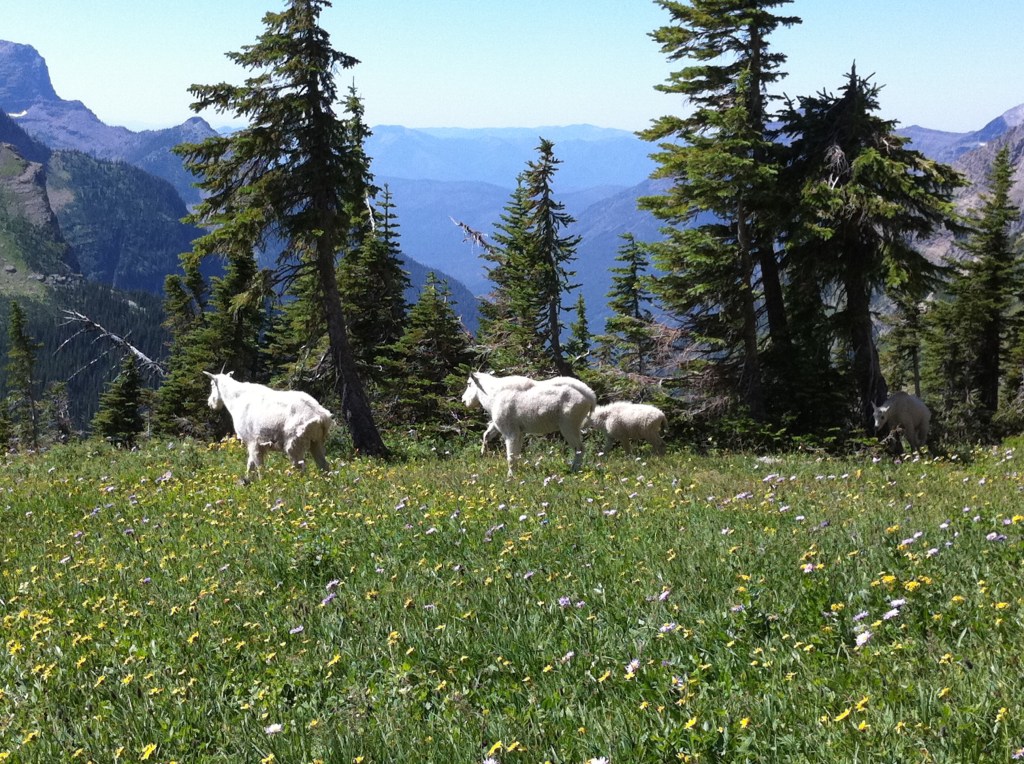
And let’s get even more forking confusing. Identical hue/chroma combinations can have differing values. What the fork? Let’s bring in some pictures to illustrate this. What is the hue and chroma of the green grass within the sunny and shaded areas in the picture?
They’re the same! Same wavelength is flying at our eyes. Huh? Yeah. So what’s going on? It all has to do with energy, reflectance of light, and photons (ooh, Einsteinium shit).
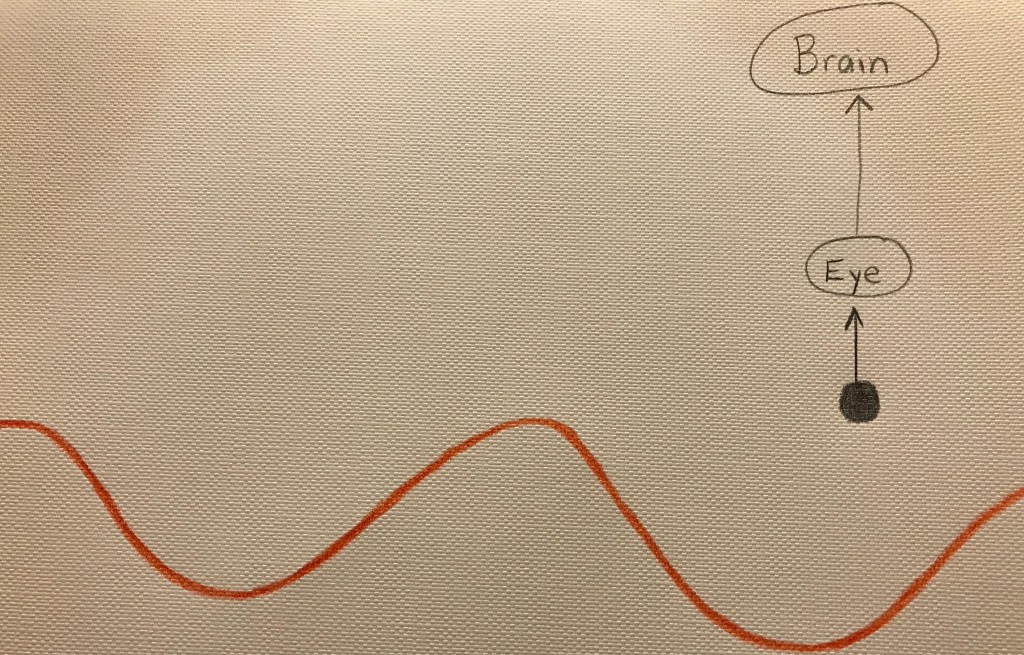
Let’s go back to our picture of a wave with a photon.
Wave with a photon.
When there is less energy from a light source hitting a colored object there is subsequently less reflectance, fewer photons being released, less retinal stimulation, less signal to the brain, and a dimmer view.
Fewer photons means less brain stimulation and a dimmer view.
When there is more energy from a light source hitting a colored object there is subsequently more reflectance, more photons being released, more retinal stimulation, more signal to the brain, and a brighter view.
Many photons means a lot of brain stimulation and a much brighter view.
Looking at green grass on a golf course we know that the hue and chroma of the grass is the same in the sunny area and in the shady area.
But the area of that golf course that’s in the shade is giving less reflectance, fewer photons are being released, there’s less retinal stimulation, there’s less of a signal to the brain, and we subsequently “see” a dimmer view. That grass has been “shaded”. We’ve added more dark/black. We’ve decreased its value (still the same wavelength though). And THAT is the essence of dental shade matching. First and foremost, what’s the value of the tooth? How many photons are being released from that tooth and subsequently stimulating our brain? More on that a different day.
Color is amazing. And holy shit is it complex! What seems so innocent and simple (and we usually take for granted) is ridiculously crazy. And even harder is researching color and actually making sense of it. In fact, color can be downright esoteric, avant-garde, incredibly weird, and, some would argue, spiritual. But aside from all that brainiac shit, look at what we’ve done with color! It’s incredible what artists do everyday with color. Walk through an art gallery and one can’t help but be amazed at (or afraid of) what people have done with color. Leonardo DaVinci and the Mona Lisa: WOW! We’ll never get to the bottom of how Leonardo mixed and placed pigments on a piece of canvas!
But this stupid blog/lecture is about teaching color (lucky me). And how the fork do I do that? Well, some really smart people (that would NOT be me) came up with theories about color. I am certainly not going to get into the intricacies of color theories cuz I will severely fork that up. So, I shall try to keep things simple (I love a little saying from our friend Winnie the Pooh who was brought to life by A.A. Milne: “It is more fun to talk with someone who doesn’t use long, difficult words but rather short, easy words like, ‘What about lunch?’”).
Color theory. What the heck is color theory? Well, the good folks at Wikipedia have an answer for that: “In the visual arts, color theory or colour theory is a body of practical guidance to color mixing and the visual effects of a specific color combination.” (https://en.m.wikipedia.org/wiki/Color_theory). And I feel like the most important bullet point from this definition is COLOR MIXING. Color mixing can be really WEIRD! And the ensuing VISUAL EFFECTS from color mixing can be equally as weird, frustrating, NOT intuitive, yet STUNNING under the right conditions and circumstances. So, if we’re going to do anything with color we have to know a little bit about color mixing and what the fork happens when we mix colors (that would be the visual effect/s).
Now there are TWO different types of COLOR MIXING. The first type of COLOR MIXING is called ADDITIVE COLOR MIXING. Huh? Yeah. This is the type of COLOR MIXING where we mix wavelengths of LIGHT. Put simply, this is the color mixing that gives us all the colors we see in things like televisions, computer monitors, iPhones, iPads, stage lighting (yes, even Hamilton on Broadway), etc. And how the fork do we even start to mix wavelengths of light? Simply, we start with primary colors. Three primary colors to be exact. RED, BLUE, and GREEN. And what’s totally nutz is we can mix varying levels of the three primary colors to make EVERY forking color! And, if we mix EQUAL amounts of all three additive primary colors we get WHITE! What’s even more whacked is that WHITE light contains EVERY wavelength known to the human race (split white light with a prism and ALL the wavelengths of color/light shoot out of that prism). Now you’re probably wondering why the fork we call it ADDITIVE COLOR MIXING? Keeping in mind that our three primary colors mixed together give us white light. And also keeping in mind that white light contains EVERY wavelength of color/light known to the human race. Then let’s think of additive color mixing as this: we’re mixing three unique/different colors of light, each with their own unique/different wavelengths, in order to yield MANY more wavelengths (white light contains every wavelength of light/color known to the human race), and so we say that we have ADDED wavelengths together (cuz white light is the resulting color and white contains EVERY wavelength). Additive color mixing. Mixing light.
Our second type of color mixing is called SUBTRACTIVE COLOR MIXING. And this is the type of COLOR MIXING where we are mixing pigments and dyes. This is what we use in dentistry. It’s also what we use in arts, ceramics, painting, photography, paint mixing, textiles, dental materials, etc. And just like in additive color mixing we have three primary colors. RED, BLUE, and…YELLOW. But these are actually the OLD SCHOOL subtractive primary colors. For reasons that I don’t want to get into (because I’ll probably just fork it up) the new subtractive primary colors are CYAN, MAGENTA, and YELLOW. You know these colors well because you’re always having to add these forking expensive pigments to your color printer. But, like dentistry, old habits die hard and much of the dental and art world are still using the OLD SCHOOL subtractive primary colors of RED, BLUE, and YELLOW. Now, subtractive color mixing works a bit like additive color mixing but with a few stark differences. As with additive, the three primary subtractive primary colors can be mixed in varying quantities to make EVERY color. And we can mix equal levels of all three subtractive primary colors to come up with something. BUT that something is NOT white. It’s BLACK and that is the stark difference between additive color mixing and subtractive color mixing (aside from the fact that we’re mixing pigments versus light).
Black is very cool. Black ABSORBS ALL WAVELENGTHS and reflects back NOTHING! Nothing escapes black. Just like a black hole, light and its energetic photons can not and do not escape from black (more on photons and wavelengths and Einstein stuff at a different time). So if there are no escaping energetic photons then we get zero photons entering our eyes and subsequently zero retinal stimulation in our eyes. No retinal stimulation in our eyes means zero visual signal going to our brains. And therefore we see NOTHING when we’re seeing black. Black has zero wavelength and zero photons. Where does that energy go? How the fork do I know? Maybe heat? Einstein knows but he ain’t talkin’ no more.
And so why do we say subtractive color mixing? Because we’re mixing TWO or MORE different colored pigments, each with unique/different wavelengths, to get only ONE or NO wavelength. So we have SUBTRACTED wavelengths. We’re going from several wavelengths to one or no wavelength. SUBTRACTIVE. And please remember that a pigment is something that absorbs ALL wavelengths of light and reflects back ONE WAVELENGTH ONLY and that one wavelength is the color we actually see.
Much, much more on subtractive color mixing and wavelengths and photons and other shit (like physics) in a future blog. Stay tuned.







 Doc's Writing Refuge