
We probably need to do a little bit more art class stuff. And we need a little physics review (shit, sorry). And, as in previous blog/lectures, my blog/lecture has a whole bunch of cheesy and hokey shit in it. However, I put a whole lot of time and effort into that cheesy and hokey shit. Most of the pictures/photographs and “art work” are my own. So I ask that people please be kind as to what they do with my intellectual property (Notice of Copyright: Copyright © 2020. Patrick James Knapp Jr, BS, DDS, MDR. All rights reserved. No part of this presentation may be reproduced in any form or by any electronic or mechanical means, including information storage and retrieval systems, without permission of Patrick James Knapp Jr, BS, DDS, MDR.). Also, unless otherwise stated my reference is: Rosenstiel, S.F., Land, M.F., & Fujimoto, J. (2016). Contemporary fixed prosthodontics (5th ed.) (pp. 624-640), St. Louis, MO: Elsevier.
So in addition to our two types of color mixing (additive and subtractive color mixing) we have two different color mixing systems. The first color mixing system is an acronym called CIELAB which stands for Commission Internationale de l’Eclairage L*a*b*. This color matching system is used exclusively for color research in dentistry. I don’t get it. Somebody does (not me) and CEILAB is beyond my limited abilities to discuss in this blog/lecture so I’m not going to talk about it. And the second color mixing system is Munsell. Munsell is the color mixing system utilized in art school, ceramics, paint mixing, pigments, and dental materials/dentistry.
But all color starts with light. There is no color without light (and for we humans there isn’t any vision without light either). And what is light? It’s electromagnetic energy that’s composed of waves and particles (also known as photons…Einstein shit).

Ugh, quick physics review. Our human visible light spectrum is made up of waves of energy that exist within a band of electromagnetic energy with wavelengths between 380-750 nanometers. And visible light is a part of (a very small part of) the entire known electromagnetic energy band. For now our known electromagnetic energy band, starting from really really small wavelengths and getting bigger and bigger, are cosmic rays, gamma rays, X rays, ultraviolet rays, visible light, infrared rays, micro waves, television waves, and finally radio waves.
Getting back to visible light, particularly white light, we can split visible light into its constituent parts which cover the entire visible light spectrum. I think we all have come to know the splitting of white light into its constituent parts as ROY G BIV. Rainbow! In other words, those 380-750 nanometer wavelengths translate into (starting small then getting bigger) ultraviolet (not visible), violet, indigo, blue, green, yellow, orange, red, and infrared (not visible). Nothing but a simple rainbow.
So now that we’ve talked about ROY G BIV, let’s talk a bit about the Munsell color mixing system. Munsell describes color as having three dimensions (Munsell calls them elements) much like height, length, and width. And the first element of Munsell is HUE. What is hue? Simply, what “color” is it? In other words, red, orange, yellow, green, blue, indigo, violet, etc. That’s Hue.
And the second element of Munsell is CHROMA. And what the heck is chroma? It’s HOW MUCH of a SINGLE COLOR we see. We can also describe chroma as intensity, saturation, purity, strength, etc. Huh? Well, picture dark blue, not-so-dark blue, light blue, and really light blue. They are all blue but they have different amounts of blue. That’s Chroma.
And the third element of Munsell is VALUE.

This is where things get really weird yet value is the most important aspect of shade matching in dentistry (and it’s really forking hard to explain/understand). Value refers to HOW MUCH BLACK there is, or how dark (or light) something is, or how many photons are reflecting out of a color and subsequently reaching our eyes/retina. And this is NOT to be confused with CHROMA which refers to HOW MUCH of a particular HUE (saturation, intensity, strength, purity) is contained within a particular “color” we see (for instance, how “blue” is it?). VALUE refers to HOW MUCH BLACK (or white) is contained within a particular hue/chroma combination “color” we see. Forking confusing right?
Hmm. Black. Let’s revisit Part Two of this blog/lecture when we talked about how black is very cool. Black ABSORBS ALL WAVELENGTHS and reflects back NOTHING! Nothing escapes black. Just like a black hole, light and its energetic photons can not and do not escape from black. So if there are no escaping energetic photons then we get zero photons entering our eyes and subsequently zero retinal stimulation in our eyes. No retinal stimulation in our eyes means zero visual signal going to our brains. And therefore we see NOTHING when we’re seeing pure black. Black has zero wavelength and gives zero photons.
OK. So what! So let’s try to talk about value a little bit more. If something is lighter it means it has a higher value AND is less (contains less) black. And increasing something’s value means that we’re making it lighter AND we’re decreasing the amount of black. And decreasing something’s value is to make it darker AND means we’re adding more black. Clear as mud, right?
Let’s look at some examples and hopefully we will start to see what the fork I mean. So a black and white photograph is nothing more than hue and chroma taken away and translated into its constituent values.


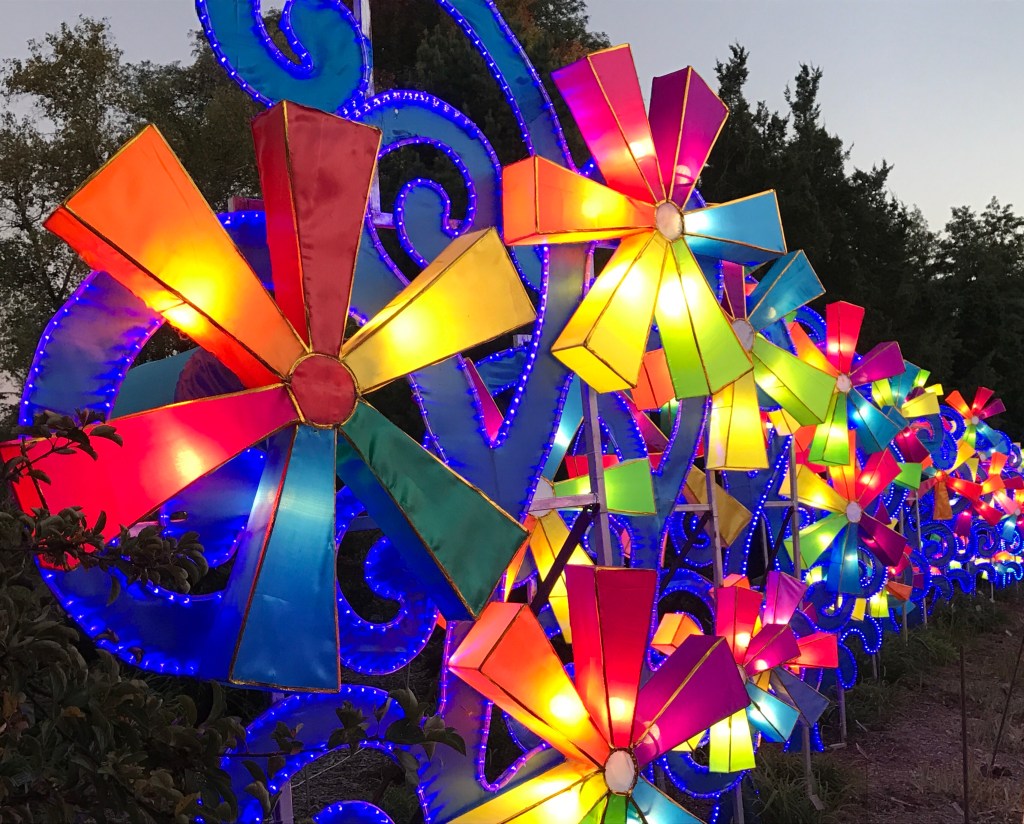
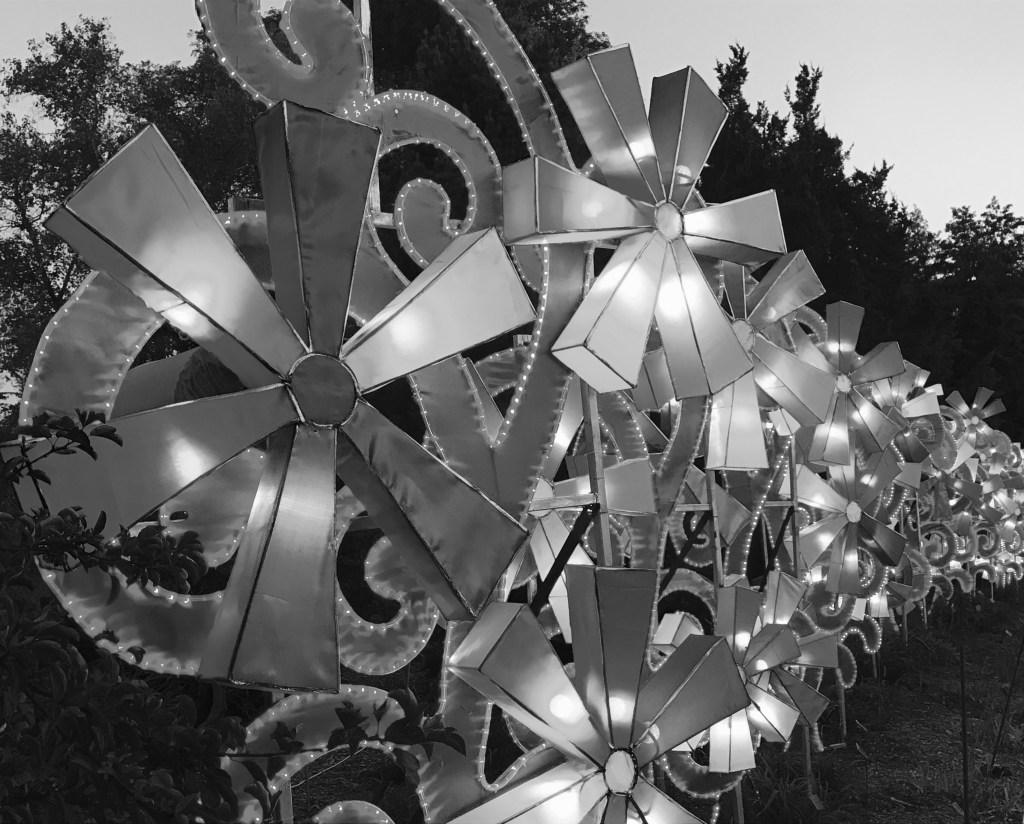
And now let’s completely blow this open to confusion. Two different hue/chroma combinations can have the same value. And why is this important? Because teeth in the same person’s mouth can have differing hue/chroma combinations AND have the SAME VALUE (this will hopefully make more sense when we start talking about commercially available shade matching tabs…more on that a different day).
And let’s get even more forking confusing. Identical hue/chroma combinations can have differing values. What the fork? Let’s bring in some pictures to illustrate this. What is the hue and chroma of the green grass within the sunny and shaded areas in the picture?

They’re the same! Same wavelength is flying at our eyes. Huh? Yeah. So what’s going on? It all has to do with energy, reflectance of light, and photons (ooh, Einsteinium shit).
Let’s go back to our picture of a wave with a photon.

When there is less energy from a light source hitting a colored object there is subsequently less reflectance, fewer photons being released, less retinal stimulation, less signal to the brain, and a dimmer view.
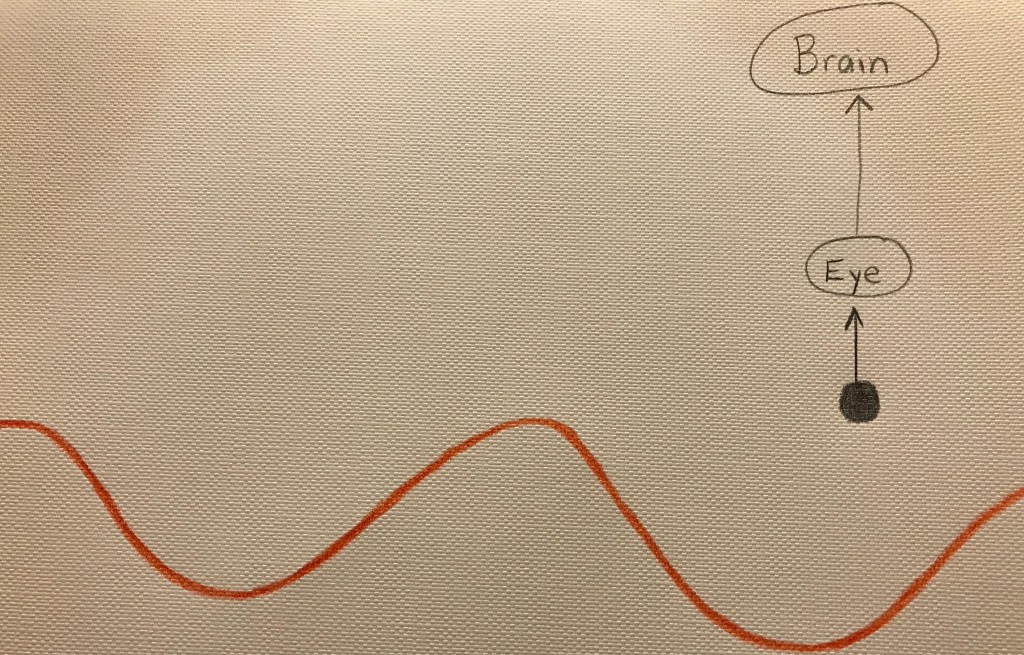
When there is more energy from a light source hitting a colored object there is subsequently more reflectance, more photons being released, more retinal stimulation, more signal to the brain, and a brighter view.

Looking at green grass on a golf course we know that the hue and chroma of the grass is the same in the sunny area and in the shady area.

But the area of that golf course that’s in the shade is giving less reflectance, fewer photons are being released, there’s less retinal stimulation, there’s less of a signal to the brain, and we subsequently “see” a dimmer view. That grass has been “shaded”. We’ve added more dark/black. We’ve decreased its value (still the same wavelength though). And THAT is the essence of dental shade matching. First and foremost, what’s the value of the tooth? How many photons are being released from that tooth and subsequently stimulating our brain? More on that a different day.
 Doc's Writing Refuge